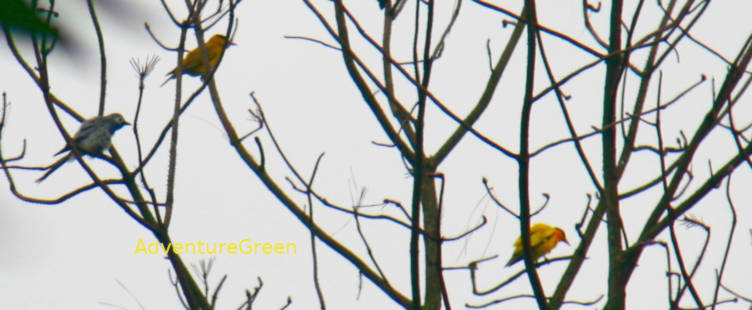


Birds of Vietnam, Bird Species in Vietnam
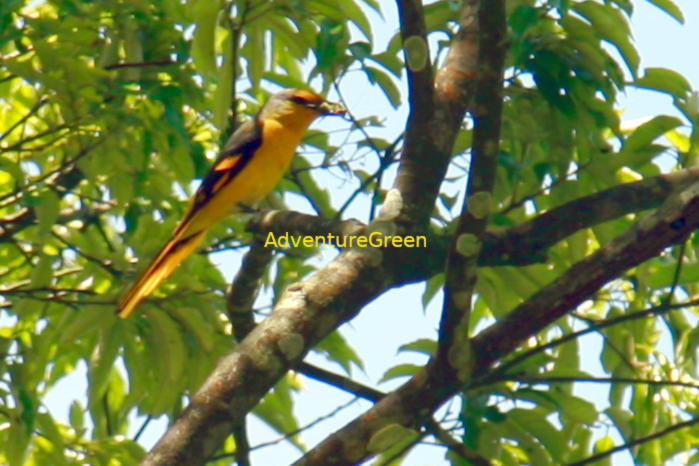
Let's join AdventureGreen on our bird quests to learn about the different birds and bird species in Vietnam. Here you can find out more about the birding spots that these bird species are found.
- Order: Anseriformes
- Family: Anatidae
- Genus: Mareca
Falcated duck or falcated teal
(Vịt lưỡi liềm, Mareca falcata)
The falcated duck or falcated teal (Mareca falcata) is a gadwall-sized dabbling duck from the east Palearctic (East Siberia and Mongolia to North Japan; wintering to India).
This dabbling duck is strongly migratory and winters in much of Southeast Asia.
The name of the genus Mareca is from the Portuguese word Marreco for a small duck.
"Falcata" comes from the Latin word falcatus, meaning "sickle-shaped" or "curved like a sickle".
- Order: Anseriformes
- Family: Anatidae
- Genus: Mareca
Gadwall (Vịt cánh trắng, Anas strepera) is a common and widespread dabbling duck in the family Anatidae.
Gadwall (Vịt cánh trắng, Mareca strepera)
The gadwall (Mareca strepera) is a common and widespread dabbling duck in the family Anatidae.
The gadwall breeds in the northern areas of Europe and across the Palearctic, and central North America and is seen in southern Asia.
The name of the genus Mareca is from the Portuguese word Marreco for a small duck.
The specific name strepera is Late Latin for "noisy".
The etymology of the word gadwall is not known.
- Order: Anseriformes
- Family: Anatidae
- Genus: Tadorna
Common shelduck (Vịt khoang, Tadorna tadorna)
The common shelduck (Tadorna tadorna) is a waterfowl species of the shelduck genus, Tadorna.
The bird is widespread and common in the Euro-Siberian region of the Palearctic, breeding in temperate regions and wintering in subtropical regions.
This species is mainly associated with lakes and rivers in open country, breeding in rabbit burrows, tree holes, haystacks or similar. In winter it is common on suitable estuaries and tidal mudflats as well.
anser: Latin anser goose;
anas, anatis: Latin duck.
The genus Tadorna name comes from the French name Tadorne for the common shelduck.
- Order: Anseriformes
- Family: Anatidae
- Genus: Tadorna
Ruddy shelduck (Vịt vàng, Tadorna ferruginea), known in India as the Brahminy duck
formerly placed in the genus Anas. Some authorities place it in the genus Casarca.
The ruddy shelduck (Tadorna ferruginea) is a bird species in the family Anatidae.
The species is a migratory bird, wintering in the Indian subcontinent and breeding in southeastern Europe and central and eastern Asia; small resident populations found in North Africa.
anser: Latin anser goose;
anas, anatis: Latin duck.
The genus Tadorna name comes from the French name Tadorne for the common shelduck.
The species name ferruginea is Latin for "rusty" and refers to the colour of the plumage.
- Order: Anseriformes
- Family: Anatidae
- Genus: Anser
Greylag goose (Ngỗng xám, Anser anser) is a species of large goose in the waterfowl family Anatidae and the type species of the genus Anser.
Greylag goose or graylag goose
(Ngỗng trời, Ngỗng xám, Anser anser)
The greylag goose (Anser anser) is a species of large goose in the waterfowl family Anatidae and the type species of the genus Anser.
The bird's distribution is widespread in Europe and Asia some of which often migrate southwards to spend the winter in warmer places, and many of which are resident, even in the north.
anas, anatis: Latin duck.
The genus name Anser comes from the Latin word anser meaning "goose".
- Order: Galliformes
- Family: Phasianidae
- Genus: Coturnix
Rain quail or black-breasted quail
( Cay Ấn Độ or Cút mưa, Coturnix coromandelica)
The rain quail (Coturnix coromandelica) is a species of quail found in the Indian Sub-continent and South-east Asia.
The bird is found in Pakistan, India, Nepal, Sri Lanka, Bangladesh, Myanmar, Thailand, Cambodia and Vietnam.
galliformes derives from "gallus", Latin for "rooster".
Phasianidae from Phasianus: Latin for "pheasant", derived from the Ancient Greek φἀσιἀνος, phāsiānos, meaning "(bird) of the Phasis", the River Phasis (now the Rioni) in Colchis on the east coast of the Black Sea (now western Georgia).
Coturnix is the Latin for the common quail.
coromandelica: from the Coromandel Coast (India's southeastern coast).
- Order: Galliformes
- Family: Phasianidae
- Genus: Coturnix
Japanese quail (Cay Nhật Bản, Coturnix japonica)
The Japanese quail (Coturnix japonica), also known as the coturnix quail, is a species of Old World quail found in East Asia.
- Order: Charadriiformes
- Family: Charadriidae
- Genus: Vanellus
Grey-headed lapwing (Te vàng, Vanellus cinereus)
The grey-headed lapwing (Vanellus cinereus) is a lapwing species which breeds in northeast China and Japan.
The bird species winters in northern Southeast Asia from northeastern India to Cambodia.
Grey-headed lapwing (Te vàng, Vanellus cinereus) has a grey head and neck, darker grey breast band and white belly. The back is brown, the rump is white and the tail is black.
The term Charadriiformes comes from New Latin, combining the Greek word kharadrios ("a bird of river valleys" or "a bird of ravines") and the Latin suffix -formes meaning "forms" or "shaped like". Therefore, Charadriiformes translates to "birds shaped like or resembling the charadrius," which is a type of plover or stone curlew historically found in dry river beds or ravines.
The family name Charadriidae has the same origin as the order name from the Greek word kharadrios ("a bird of river valleys" or "a bird of ravines").
Vanellus is a Latin word meaning "little fan". The name refers to the sound of the wings in flight, which was compared to the sound of a winnowing fan. It is a diminutive of the Latin word vannus (“fan for winnowing grain”).
In Latin, cinereus means "ash-colored," "ash-gray," or "resembling ashes". It comes from the Latin word cinis, which means "ashes".
Marsh sandpiper
(Choắt đốm đen, Tringa stagnatilis)
The marsh sandpiper (Tringa stagnatilis) is a small wader of the family Scolopacidae.
The bird breeds in the Palearctic from easternmost Europe to the Russian Far East.
This species is migratory with a majority of birds wintering in Africa and India, and some migrating to Southeast Asia and Australia.
The term Charadriiformes comes from New Latin, combining the Greek word kharadrios ("a bird of river valleys" or "a bird of ravines") and the Latin suffix -formes meaning "forms" or "shaped like". Therefore, Charadriiformes translates to "birds shaped like or resembling the charadrius," which is a type of plover or stone curlew historically found in dry river beds or ravines.
The word Scolopacidae is New Latin, derived from the genus name Scolopax (Latin for "snipe" or "woodcock") and the common zoological suffix for family names, -idae.
The name Tringa is the Neo-Latin name given to the green sandpiper based on Ancient Greek trungas, a thrush-sized, white-rumped, tail-bobbing wading bird mentioned by Aristotle.
The specific epithet stagnatilis is from Latin stagnum, "swamp".
- Order: Charadriiformes
- Family: Scolopacidae
- Genus: Numenius
Eurasian curlew or common curlew (Choắt mỏ cong lớn, Numenius arquata)
The species name arquata is the Medieval Latin name for this bird, derived from Latin arcuatus, "bow-shaped", referring to the shape of the bill.
The Eurasian curlew or common curlew (Numenius arquata) is a very large wader in the family Scolopacidae.
The bird breeds across temperate Europe and Asia. Most populations of this species are migratory wintering in Africa, southern Europe and south Asia.
The term Charadriiformes comes from New Latin, combining the Greek word kharadrios ("a bird of river valleys" or "a bird of ravines") and the Latin suffix -formes meaning "forms" or "shaped like". Therefore, Charadriiformes translates to "birds shaped like or resembling the charadrius," which is a type of plover or stone curlew historically found in dry river beds or ravines.
The word Scolopacidae is New Latin, derived from the genus name Scolopax (Latin for "snipe" or "woodcock") and the common zoological suffix for family names, -idae.
The English name may have been influenced by the Old French corliu, "messenger", from courir , "to run".
Numenius (Νουμήνιος, noumēnios) comes from Greek, meaning "of the new moon" or related to the moon's first phase, derived from neos (new) + mene (moon), referencing the curlew's crescent-shaped bill, though it's also linked to "bird" or used by philosophers like Numenius of Apamea, making it a term with both biological and philosophical roots from Greek to Latin.
Arquata comes from Latin arcuatus, meaning "bow-shaped" or "arched," referring to the long, curved beak of the bird.
- Order: Charadriiformes
- Family: Scolopacidae
- Genus: Tringa
Spotted redshank
(Choắt chân đỏ, Tringa erythropus)
Spotted Redshank (Choắt chân đỏ, Tringa erythropus) is a wader (shorebird) in the large bird family Scolopacidae.
- Order: Charadriiformes
- Family: Scolopacidae
- Genus: Limosa
Black-tailed godwit (Choắt mỏ thẳng đuôi đen, Limosa limosa)
The black-tailed godwit (Limosa limosa) is a large, long-legged, long-billed shorebird of the family Scolopacidae.