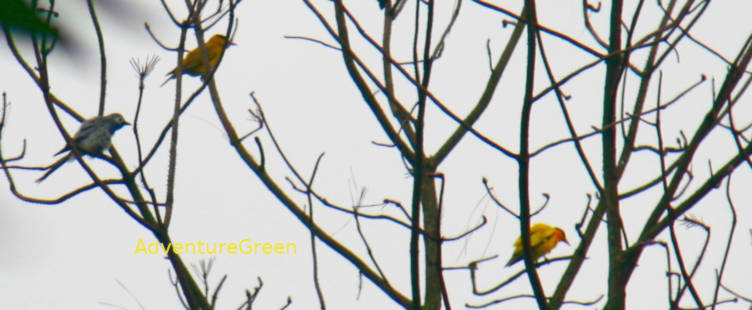


Birds of Vietnam, Bird Species in Vietnam
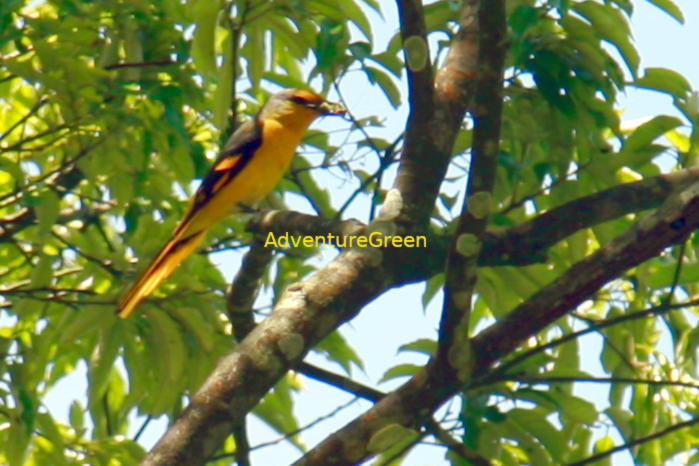
Let's join AdventureGreen on our bird quests to learn about the different birds and bird species in Vietnam. Here you can find out more about the birding spots that these bird species are found.
- Order: Charadriiformes
- Family: Scolopacidae
- Genus: Limnodromus
Asian dowitcher
(Choắt chân màng lớn, Limnodromus semipalmatus)
The Asian dowitcher (Limnodromus semipalmatus) is a rare medium-large wader belonging to the family Scolopacidae.
The breeding habitat of this bird is grassy wetlands in inland Siberia and Manchuria.
The bird winters on coasts in southeast Asia and northern Australia.
The term Charadriiformes comes from New Latin, combining the Greek word kharadrios ("a bird of river valleys" or "a bird of ravines") and the Latin suffix -formes meaning "forms" or "shaped like". Therefore, Charadriiformes translates to "birds shaped like or resembling the charadrius," which is a type of plover or stone curlew historically found in dry river beds or ravines.
The word Scolopacidae is New Latin, derived from the genus name Scolopax (Latin for "snipe" or "woodcock") and the common zoological suffix for family names, -idae.
Limnodromus is a genus of waders commonly known as dowitchers.
Limnodromus comes from Ancient Greek, combining "limnē" (λιμνη) meaning "marsh" or "lake" and "-dromos" (-δρομος) meaning "-racer" or "-runner," essentially describing a "marsh-runner" or "marsh-racer," fitting for dowitchers known for their rapid probing in wetlands.
Semipalmatus is Latin, combining "semi-" (half) and "palma" (palm/hand), meaning "half-palmed" or "partially webbed," describing birds with partly webbed feet.
- Order: Charadriiformes
- Family: Scolopacidae
- Genus: Calidris
Spoon-billed sandpiper
(Rẽ mỏ thìa, Calidris pygmaea)
Spoon-billed sandpiper (Rẽ mỏ thìa, Calidris pygmeus, Calidris pygmaea), a critically threatened species, is a small wader which breeds in north-eastern Russia and winters in Southeast Asia.
The bird is frequently sighted birds at the Xuan Thuy National Park in winter.
Charadriidae, Charadrius: Late Latin word for a yellowish bird mentioned in the fourth-century Vulgate; from Ancient Greek kharadrios a bird found in ravines and river valleys (kharadra, "ravine").
The word Scolopacidae is New Latin, derived from the genus name Scolopax (Latin for "snipe" or "woodcock") and the common zoological suffix for family names, -idae.
The genus name Calidris is from Ancient Greek kalidris or skalidris, a term used by Aristotle for some grey-coloured waterside birds.
Pygmaea comes from Greek pygmaîos (πυγμαῖος) and Latin pygmaeus, meaning "dwarfish," "undersized," or "fist-sized," derived from pygmē (πυγή) meaning "fist" or a measure of forearm length (elbow to knuckle). It's used in scientific names to denote something very small. Latin adoption is pygmaeus (dwarf, dwarfish).
- Order: Pelecaniformes
- Family: Pelecanidae
- Genus: Pelecanus
Spot-billed pelican
(Bồ nông chân xám, Pelecanus philippensis) or gray pelican
The spot-billed pelican (Pelecanus philippensis) or gray pelican is a member of the pelican family Pelicanidae.
The bird breeds in southern Asia from southern Iran across India east to Indonesia.
This bird species is not migratory but is known to make local travel and is more widely distributed during the non-breeding season.
Pelecaniformes, Pelecanidae, Pelecanus
Pelecanus: Greek pelekan, pelekanos pelican.
Greek pelekan (πελεκάν), meaning "pelican" or related to "axe" (pelekys).
From pelekys (πέλεκυς), meaning "axe," likely due to the shape of the bill.
Philippensis in Latin is an adjective meaning "of the Philippine Islands" or "from the Philippines".
- Order: Pelecaniformes
- Family: Pelecanidae
- Genus: Pelecanus
Great white pelican (Bồ nông trắng lớn, Pelecanus onocrotalus)
also known as the eastern white pelican, rosy pelican or simply white pelican
The great white pelican (Pelecanus onocrotalus) is a bird in the pelican family Pelecanidae.
The bird breeds from southeastern Europe through Asia and Africa.
This species migration is partially known with northern populations migrating to China, India, Myanmar, with stragglers reaching Java and Bali in Indonesia.
Pelecaniformes, Pelecanidae, Pelecanus
Pelecanus: Greek pelekan, pelekanos pelican.
Greek pelekan (πελεκάν), meaning "pelican" or related to "axe" (pelekys).
From pelekys (πέλεκυς), meaning "axe," likely due to the shape of the bill.
Onocrotalus comes from Ancient Greek derived from Greek ónos (donkey) + krótalon (rattle/clapper), humorously suggesting the sound of its flapping or the donkey-like braying of its voice, leading to its Latin adoption as "donkey-clapper".
- Order: Charadriiformes
- Family: Laridae
- Genus: Saundersilarus
Saunders's gull
(Mòng bể mỏ ngắn, Saundersilarus saundersi) or the Chinese black-headed gull
earlier placed in the genus Larus.
Saunders's gull (Saundersilarus saundersi) is a species of gull in the family Laridae.
The bird is found in China, Japan, North Korea, South Korea, Macau, Russia, Taiwan, and Vietnam.
The term Charadriiformes comes from New Latin, combining the Greek word kharadrios ("a bird of river valleys" or "a bird of ravines") and the Latin suffix -formes meaning "forms" or "shaped like". Therefore, Charadriiformes translates to "birds shaped like or resembling the charadrius," which is a type of plover or stone curlew historically found in dry river beds or ravines.
The family name Laridae comes from the Latin word Larus, meaning "gull," which itself derives from the Ancient Greek word λάρος (laros), also meaning "gull" or a large seabird, sometimes described as "ravenous". So, Laridae essentially means "the gull family," encompassing gulls, terns, skuas, and skimmers.
Saundersilarus is a recently created genus name for Saunders's gull, combining the English name "Saunders" (honoring ornithologist William Saunders) with the Greek suffix -ilarus
The Saunders's gull is named after the British ornithologist Howard Saunders.
Nordmann's greenshank
(Choắt lớn mỏ vàng, Tringa guttifer) or the spotted greenshank
Nordmann's greenshank (Tringa guttifer) is a wader in the wader family Scolopacidae.
The Nordmann's greenshank breeds in eastern Russia.
The bird wintering time has been recorded in South Korea, mainland China, Hong Kong, and Taiwan on passage, and in Bangladesh, and South-East Asia.
The term Charadriiformes comes from New Latin, combining the Greek word kharadrios ("a bird of river valleys" or "a bird of ravines") and the Latin suffix -formes meaning "forms" or "shaped like". Therefore, Charadriiformes translates to "birds shaped like or resembling the charadrius," which is a type of plover or stone curlew historically found in dry river beds or ravines.
The word Scolopacidae is New Latin, derived from the genus name Scolopax (Latin for "snipe" or "woodcock") and the common zoological suffix for family names, -idae.
The name Tringa is the Neo-Latin name given to the green sandpiper based on Ancient Greek trungas, a thrush-sized, white-rumped, tail-bobbing wading bird mentioned by Aristotle.
In Latin, guttifer (or guttifera) means "drop-bearing" or "resin/oil-bearing," combining gutta (drop) and ferre (to bear/carry), used botanically for plants producing latex or resin.
Chinese egret (Cò trắng Trung Quốc, Egretta eulophotes) or Swinhoe's egret is a threatened species of egret from east Asia.
- Order: Pelecaniformes
- Family: Threskiornithidae
- Genus: Platalea
Black-faced spoonbill
(Cò thìa, Platalea minor)
The black-faced spoonbill (Platalea minor) is a species of wading bird in the ibis and spoonbill family Threskiornithidae, found in eastern Asia.
- Order: Pelecaniformes
- Family: Threskiornithidae
- Genus: Platalea
Eurasian spoonbill
(Cò thìa Á Âu, Platalea leucorodia), or common spoonbill
The Eurasian spoonbill (Platalea leucorodia), or common spoonbill, is a wading bird of the ibis and spoonbill family Threskiornithidae, widely found in Europe, Africa and Asia.
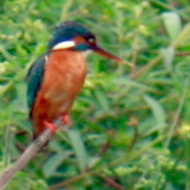
- Order: Coraciiformes
- Family: Alcedinidae
- Genus: Alcedo
Common kingfisher
also known as the Eurasian kingfisher and river kingfisher (Bồng chanh, Alcedo atthis)
The common kingfisher (Alcedo atthis), also known as the Eurasian kingfisher and river kingfisher, is a small kingfisher with seven subspecies recognized within its wide distribution across Eurasia and North Africa.
Heron (Chim Diệc) is a family of wading birds in inhabiting in wetlands. They are among the most intelligent birds in looking for food.
Cormorant (Chim Còng Cọc, Cốc Đế) is a species of aquatic birds. The bird dives into the water fishing. Their eyes are protected by a transparent membrane which allow them to see the preys clearly.