


Vietnam Adventure Tours & Travel, Trekking, Bird Watching, Cycling Tours
Sandpiper
-
Common Greenshank
- Order: Charadriiformes
- Family: Scolopacidae
- Genus: Tringa
Common greenshank (Choắt lớn, Tringa nebularia)
The Common Greenshank (Tringa nebularia, Choắt lớn) is a wader in the large family Scolopacidae, sandpiper, Tringa genus.
The bird breeds from northern Scotland eastwards across northern Europe and east across the Palearctic.
This species is a migratory species, wintering in Africa, the Indian subcontinent, and Australasia, usually on fresh water.
The term Charadriiformes comes from New Latin, combining the Greek word kharadrios ("a bird of river valleys" or "a bird of ravines") and the Latin suffix -formes meaning "forms" or "shaped like". Therefore, Charadriiformes translates to "birds shaped like or resembling the charadrius," which is a type of plover or stone curlew historically found in dry river beds or ravines.The word Scolopacidae is New Latin, derived from the genus name Scolopax (Latin for "snipe" or "woodcock") and the common zoological suffix for family names, -idae.
The name Tringa is the Neo-Latin name given to the green sandpiper based on Ancient Greek trungas, a thrush-sized, white-rumped, tail-bobbing wading bird mentioned by Aristotle.
The specific nebularia is from Latin nebula "mist". -
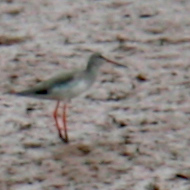
Common Redshank
- Order: Charadriiformes
- Family: Scolopacidae
- Genus: Tringa
Common redshank or simply redshank (Choắt nâu, Tringa totanus)
Common Redshank (Tringa totanus, Choắt nâu) is an Eurasian wader, Scholopacidae family, tringa genus.
The bird is found across temperate Eurasia; wintering on coasts around the Mediterranean, on the Atlantic coast of Europe from Ireland and Great Britain southwards, and in South Asia.
The Common redshank is a winter pass-through bird, commonly sighted at the Xuan Thuy National Park. -
Common Sandpiper
- Order: Charadriiformes
- Family: Scolopacidae
- Genus: Actitis
Common sandpiper (Choắt nhỏ, Actitis hypoleucos)
The Common Sandpiper (Actitis hypoleucos, Choắt nhỏ) is a small Palearctic wader species, family of Scolopacidae, genus Actitis. -
Dunlin
- Order: Charadriiformes
- Family: Scolopacidae
- Genus: Calidris
Dunlin (Rẽ trán trắng, Calidris alpina)
formerly placed in the genus Erolia.Dunlin (Calidris alpina, Rẽ trán trắng) is a small wader, Scolopacidae family, Calidris genus.
The bird is a pass-through winter bird, commonly sighted at the Xuan Thuy National Park.Charadriidae, Charadrius: Late Latin word for a yellowish bird mentioned in the fourth-century Vulgate; from Ancient Greek kharadrios a bird found in ravines and river valleys (kharadra, "ravine").
The word Scolopacidae is New Latin, derived from the genus name Scolopax (Latin for "snipe" or "woodcock") and the common zoological suffix for family names, -idae.
The genus name Calidris is from Ancient Greek kalidris or skalidris, a term used by Aristotle for some grey-coloured waterside birds.
The specific alpina is from Latin and means "of high mountains", in this case referring to the Alps.The English name derives from dun, "dull brown", with the suffix -ling, meaning a person or thing with the given quality.
-
Far Eastern Curlew
- Order: Charadriiformes
- Family: Scolopacidae
- Genus: Numenius
Far Eastern curlew
(Choắt mỏ cong hông nâu, Rẽ mỏ cong hông nâu, Numenius madagascariensis)The Far Eastern Curlew (Numenius madagascariensis, Choắt mỏ cong hông nâu) is a large shorebird in the large family Scolopacidae.
The bird spends its breeding season in northeastern Asia, Siberia to Kamchatka, and Mongolia. Most individuals spend the non-breeding season in coastal Australia; some wintering in Indonesia, Thailand, Philippines and New Zealand...
The term Charadriiformes comes from New Latin, combining the Greek word kharadrios ("a bird of river valleys" or "a bird of ravines") and the Latin suffix -formes meaning "forms" or "shaped like". Therefore, Charadriiformes translates to "birds shaped like or resembling the charadrius," which is a type of plover or stone curlew historically found in dry river beds or ravines.
The word Scolopacidae is New Latin, derived from the genus name Scolopax (Latin for "snipe" or "woodcock") and the common zoological suffix for family names, -idae.
The English name may have been influenced by the Old French corliu, "messenger", from courir , "to run".
Numenius (Νουμήνιος, noumēnios) comes from Greek, meaning "of the new moon" or related to the moon's first phase, derived from neos (new) + mene (moon), referencing the curlew's crescent-shaped bill, though it's also linked to "bird" or used by philosophers like Numenius of Apamea, making it a term with both biological and philosophical roots from Greek to Latin.
Madagascariensis is a Latin-derived term meaning "belonging to or from Madagascar," indicating a species' origin from that island: the term is built from "Madagascar" plus the Latin suffix '-ensis' for origin. The term was an error or mistaken for Makassar on Sulawesi, Indonesia. This bird species has never been recorded in Madagascar.
-
Grey-tailed Tattler
- Order: Charadriiformes
- Family: Scolopacidae
- Genus: Tringa
Gray-tailed tattler
(Choắt lùn đuôi xám, Tringa brevipes)
also known as the Siberian tattler or Polynesian tattler,
formerly Heteroscelus brevipes.Grey-tailed tattler(Choắt lùn đuôi xám, Tringa brevipes) is a small shore bird, Scolopacidae family, Tringa genus.
The bird is migratory, breeding in northeast Siberia, wintering in the area from southeast Asia to Australia.
The grey-tailed Tattler is a pass-through winter bird commonly sighted at the Xuan Thuy National Park.The term Charadriiformes comes from New Latin, combining the Greek word kharadrios ("a bird of river valleys" or "a bird of ravines") and the Latin suffix -formes meaning "forms" or "shaped like". Therefore, Charadriiformes translates to "birds shaped like or resembling the charadrius," which is a type of plover or stone curlew historically found in dry river beds or ravines.
The word Scolopacidae is New Latin, derived from the genus name Scolopax (Latin for "snipe" or "woodcock") and the common zoological suffix for family names, -idae.
The name Tringa is the Neo-Latin name given to the green sandpiper based on Ancient Greek trungas, a thrush-sized, white-rumped, tail-bobbing wading bird mentioned by Aristotle.
The specific brevipes is from Latin brevis, "short", and pes, "foot".
The English name for the tattlers refers to their noisy call.
-
Long-billed Dowitcher
The Long-billed Dowitcher (Limnodromus scolopaceus, Choắt chân màng mỏ dài) is in Scolopacidae - Sandpiper, Limnodromus genus.
-
Red Knot
- Order: Charadriiformes
- Family: Scolopacidae
- Genus: Calidris
Red knot or just knot
(Rẽ lưng nâu, Calidris canutus)The red knot or knot (Calidris canutus) is a shorebird of the family Scolopacidae for sandpipers and plovers.
The bird species breeds in the far north of Canada, Europe, and Russia.
Red Knot is a pass-through winter bird commonly sighted at the Xuan Thuy National Park Vietnam.Charadriidae, Charadrius: Late Latin word for a yellowish bird mentioned in the fourth-century Vulgate; from Ancient Greek kharadrios a bird found in ravines and river valleys (kharadra, "ravine").
The word Scolopacidae is New Latin, derived from the genus name Scolopax (Latin for "snipe" or "woodcock") and the common zoological suffix for family names, -idae.
The genus name Calidris is from Ancient Greek kalidris or skalidris, a term used by Aristotle for some grey-coloured waterside birds.
Canutus is a Latin word, meaning "grey-haired" or "grizzled," derived from Latin roots (Cānūtus) for "grey" or "white" often used in Late Latin as an adjective describing someone with gray hair.
-
Red-necked Phalarope
- Order: Charadriiformes
- Family: Scolopacidae
- Genus: Phalaropus
Red-necked phalarope
(Dẽ cổ đỏ, Rẽ cổ đỏ, Phalaropus lobatus), also known as the northern phalarope and hyperborean phalaropeRed-necked Phalarope (Phalaropus lobatus, Rẽ cổ đỏ) is a medium-sized wader, Scolopacidae family, Phalaropus genus.
This bird breeds in the Arctic regions of North America and Eurasia.
It is migratory, unusually winters at sea on tropical oceans.
The bird is a pass-through winter bird, uncommonly sighted at the Xuan Thuy National Park.The term Charadriiformes comes from New Latin, combining the Greek word kharadrios ("a bird of river valleys" or "a bird of ravines") and the Latin suffix -formes meaning "forms" or "shaped like". Therefore, Charadriiformes translates to "birds shaped like or resembling the charadrius," which is a type of plover or stone curlew historically found in dry river beds or ravines.
The word Scolopacidae is New Latin, derived from the genus name Scolopax (Latin for "snipe" or "woodcock") and the common zoological suffix for family names, -idae.
Phalaropus (the genus name for phalaropes) comes from Ancient Greek: phalaris (meaning "coot") + pous (meaning "foot"), essentially translating to "coot-footed," because these birds have lobed toes like coots, a key feature for their swimming and feeding style.
The English and genus names come through French phalarope.
Lobatus is a Latin term meaning "having lobes" or "lobed," derived from the Greek lobos (lobe, pod, earlobe), used in biology for organisms or parts with rounded, protruding divisions, like the lobed toes of a phalarope or the divisions in a conch shell, often describing a "tongue-shaped" or divided structure.
-
Sanderling
- Order: Charadriiformes
- Family: Scolopacidae
- Genus: Calidris
Sanderling (Rẽ cổ xám, Calidris alba)
The name derives from Old English sand-yrðling, "sand-ploughman".The sanderling (Calidris alba) is a small wading bird of the family Scolopacidae.
The bird breeds around the North Pole and is a long-distance migrant, wintering south to South America, western and southern Europe, Africa, and Australia.
Sanderling is a pass-through winter bird commonly sighted at the Xuan Thuy National Park.Charadriidae, Charadrius: Late Latin word for a yellowish bird mentioned in the fourth-century Vulgate; from Ancient Greek kharadrios a bird found in ravines and river valleys (kharadra, "ravine").
The word Scolopacidae is New Latin, derived from the genus name Scolopax (Latin for "snipe" or "woodcock") and the common zoological suffix for family names, -idae.
The genus name Calidris is from Ancient Greek kalidris or skalidris, a term used by Aristotle for some grey-coloured waterside birds.
The specific, alba, is Latin for "white".
-
Scolopacidae
- Order: Charadriiformes
- Family: Scolopacidae
Scolopacidae is a large family of shorebirds, or waders, which mainly includes many species known as sandpipers, but also others such as curlews and snipes.
-
Sharp-tailed Sandpiper
- Order: Charadriiformes
- Family: Scolopacidae
- Genus: Calidris
Sharp-tailed sandpiper
(Rẽ đuôi nhọn, Calidris acuminata)The sharp-tailed sandpiper (Calidris acuminata) is a small-medium migratory wader or shorebird, found mostly in Siberia during the summer breeding period (June to August) and Australia for wintering (September to March).
Charadriidae, Charadrius: Late Latin word for a yellowish bird mentioned in the fourth-century Vulgate; from Ancient Greek kharadrios a bird found in ravines and river valleys (kharadra, "ravine").The word Scolopacidae is New Latin, derived from the genus name Scolopax (Latin for "snipe" or "woodcock") and the common zoological suffix for family names, -idae.
The genus name Calidris is from Ancient Greek kalidris or skalidris, a term used by Aristotle for some grey-coloured waterside birds.
The specific acuminata is from Latin acuminatus, 'sharp, pointed'.
-
Spoon-billed Sandpiper
- Order: Charadriiformes
- Family: Scolopacidae
- Genus: Calidris
Spoon-billed sandpiper
(Rẽ mỏ thìa, Calidris pygmaea)Spoon-billed sandpiper (Rẽ mỏ thìa, Calidris pygmeus, Calidris pygmaea), a critically threatened species, is a small wader which breeds in north-eastern Russia and winters in Southeast Asia.
The bird is frequently sighted birds at the Xuan Thuy National Park in winter.
Charadriidae, Charadrius: Late Latin word for a yellowish bird mentioned in the fourth-century Vulgate; from Ancient Greek kharadrios a bird found in ravines and river valleys (kharadra, "ravine").The word Scolopacidae is New Latin, derived from the genus name Scolopax (Latin for "snipe" or "woodcock") and the common zoological suffix for family names, -idae.
The genus name Calidris is from Ancient Greek kalidris or skalidris, a term used by Aristotle for some grey-coloured waterside birds.
Pygmaea comes from Greek pygmaîos (πυγμαῖος) and Latin pygmaeus, meaning "dwarfish," "undersized," or "fist-sized," derived from pygmē (πυγή) meaning "fist" or a measure of forearm length (elbow to knuckle). It's used in scientific names to denote something very small. Latin adoption is pygmaeus (dwarf, dwarfish).
-
Terek Sandpiper
Terek sandpiper
(Choắt chân màng bé, Xenus cinereus)The Terek Sandpiper (Xenus cinereus, Choắt chân màng bé) is a small migratory wader species, family of Scolopacidae, genus Xenus. Terek Sandpiper is a pass-through winter bird commonly sighted at the Xuan Thuy National Park.
The bird breeds from Finland through northern Siberia to the Kolyma River, and migrates south in winter to tropical coasts in east Africa, south Asia and Australia.
The term Charadriiformes comes from New Latin, combining the Greek word kharadrios ("a bird of river valleys" or "a bird of ravines") and the Latin suffix -formes meaning "forms" or "shaped like". Therefore, Charadriiformes translates to "birds shaped like or resembling the charadrius," which is a type of plover or stone curlew historically found in dry river beds or ravines.
The word Scolopacidae is New Latin, derived from the genus name Scolopax (Latin for "snipe" or "woodcock") and the common zoological suffix for family names, -idae.
The bird English name is named after the Terek River which flows into the west of the Caspian Sea where it was first observed.
The genus name Xenus is from Ancient Greek xenos meaning "stranger".
The specific epithet cinereus is Latin for "ash-grey" from cinis, cineris, "ashes". -
Wood Sandpiper
- Order: Charadriiformes
- Family: Scolopacidae
- Genus: Tringa
Wood sandpiper (Choắt bụng xám, Tringa glareola)
The Wood Sandpiper (Tringa glareola, Choắt bụng xám) is a small wader in the large family Scolopacidae, sandpiper, Tringa genus. Wood Sandpiper is a pass-through winter bird commonly sighted at the Xuan Thuy National Park.
The term Charadriiformes comes from New Latin, combining the Greek word kharadrios ("a bird of river valleys" or "a bird of ravines") and the Latin suffix -formes meaning "forms" or "shaped like". Therefore, Charadriiformes translates to "birds shaped like or resembling the charadrius," which is a type of plover or stone curlew historically found in dry river beds or ravines.The word Scolopacidae is New Latin, derived from the genus name Scolopax (Latin for "snipe" or "woodcock") and the common zoological suffix for family names, -idae.
The name Tringa comes from the Ancient Greek word trungas, meaning "wader".
The specific epithet glareola is from Latin glarea, " gravel".
Glareola is a Latin word that means "gravel," derived from glarea, a diminutive of "gravel". The name likely refers to the patterns on the back of the bird.
Diminutive suffix: The name uses the diminutive suffix "-ola," turning "gravel" into "little gravel".