

Birds of Vietnam, Bird Species in Vietnam

Let's join AdventureGreen on our bird quests to learn about the different birds and bird species in Vietnam. Here you can find out more about the birding spots that these bird species are found.
- Order: Passeriformes
- Family: Muscicapidae
- Genus: Saxicola
- French: Tarier de Stejneger
Amur Stonechat
or Stejneger's stonechat
Saxicola stejnegeri
The Amur stonechat or Stejneger's stonechat (Saxicola stejnegeri) is a species of stonechat native to eastern Asia.
Muscicapidae: Muscicapa comes from the Latin musca meaning a fly, and capere to catch.
Saxicola in Latin: saxum, rock + incola, dwelling in.
The Latin binomial commemorates the Norwegian ornithologist Leonhard Hess Stejneger.
Amur: a river in NE Asia, rising in N Mongolia as the Argun and flowing southeast, then northeast to the Sea of Okhotsk: forms the boundary between Manchuria and Russia.
- Order: Passeriformes
- Family: Acrocephalidae
- Genus: Acrocephalus
Oriental Reed Warbler
(Chích đầu nhọn phương đông, Acrocephalus orientalis)
The Oriental reed warbler (Acrocephalus orientalis) is a passerine bird of eastern Asia belonging to the reed warbler genus Acrocephalus.
The bird breeds in southern Siberia, Mongolia, northern, central and eastern China, Korea and Japan.
This species winters in north-east India and across South-east Asia to the Philippines and Indonesia, sometimes reaching New Guinea and Australia.
The family is from the name of the genus Acrocephalus from Ancient Greek akros, "highest", and kephale, "head".
It is possible that the Naumanns thought akros meant "sharp-pointed".
- Order: Passeriformes
- Family: Acrocephalidae
- Genus: Acrocephalus
- French: Rousserolle de Schrenck
Black-browed reed warbler, Schrenk's Reed Warbler
(Chích đầu nhọn mày đen, Acrocephalus bistrigiceps)
The black-browed reed warbler (Acrocephalus bistrigiceps) is a marsh-warbler in the family Acrocephalidae.
The bird breeds from eastern Mongolia and south-eastern Russia to eastern China and Japan, and winters in Southeast Asia.
The family is from the name of the genus Acrocephalus from Ancient Greek akros, "highest", and kephale, "head".
It is possible that the Naumanns thought akros meant "sharp-pointed".
bistrigiceps: Latin bi-: double; striga: furrow; -ceps: -capped (caput head).
- Order: Passeriformes
- Family: Acrocephalidae
- Genus: Acrocephalus
Great reed warbler
(Chích sậy lớn, Acrocephalus arundinaceus)
The great reed warbler (Acrocephalus arundinaceus) is an insectivorous bird in the family Acrocephalidae.
The family is from the name of the genus Acrocephalus from Ancient Greek akros, "highest", and kephale, "head".
It is possible that the Naumanns thought akros meant "sharp-pointed".
The Latin word arundinaceus (and its variant harundinaceus) means "resembling a reed" or "reed-like", derived from the Latin word arundo (or harundo), meaning "reed" or "cane", and the suffix -aceus, meaning "resembling" or "belonging to".
- Order: Accipitriformes
- Family: Accipitridae
- Genus: Milvus
Black kite
(Diều hâu, Milvus migrans)
The black kite (Milvus migrans) is a medium-sized bird of prey in the family Accipitridae, which also includes many other diurnal raptors.
Accipitriformes, Accipitridae from Latin accipiter/accipitri- "hawk".
Milvus: Latin for kite.
migrans: Latin migrans migrating (migrare to migrate).
- Order: Pelecaniformes
- Family: Ardeidae
- Genus: Botaurus
- French: Blongios de Chine
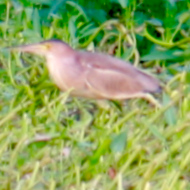
Yellow bittern
(Cò lửa lùn, Botaurus sinensis)
The yellow bittern (Botaurus sinensis) is a small bittern of the Old World origins in the family Ardeidae.
- Order: Pelecaniformes
- Family: Ardeidae
- Genus: Botaurus
Von Schrenck's bittern or Schrenck's bittern (Cò nâu, Botaurus eurhythmus)
Von Schrenck's bittern or Schrenck's bittern (Botaurus eurhythmus) is a small bittern in the family heron Ardeidae.
This bird species breeds in southeast Siberia, east China, the Korean Peninsula and Japan and winters from the Malay Peninsula to the Greater Sunda Islands, Sulawesi and the Philippines.
Pelecaniformes, Pelecanus: Greek pelekan, pelekanos pelican.
Ardeidae, Ardea: Latin word meaning "heron".
The genus name Botaurus is derived from Medieval Latin butaurus, Bos (ox) and taurus (bull), because the bittern's call resembles the bellowing of a bull.
The specific epithet eurhythmus is from Ancient Greek eurhuthmos meaning "graceful" or "well-proportioned".
In Greek, eurhythmics means "good rhythm" or "good flow," combining "eu" (good) and "rhythmós" (rhythm, measured flow). It signifies a harmonious and well-proportioned rhythm or movement. The term is also understood to mean "rhythmic order" or "graceful motion".
The term reflects a balance and harmony in both musical and physical expression.
- Order: Pelecaniformes
- Family: Ardeidae
- Genus: Botaurus
- French: Butor étoilé
Eurasian bittern
or great bittern
(Vạc rạ, Botaurus stellaris)
The Eurasian bittern or great bittern (Botaurus stellaris) is a wading bird in the bittern subfamily (Botaurinae) of the heron family Ardeidae.
Pelecaniformes, Pelecanus: Greek pelekan, pelekanos pelican.
Ardeidae, Ardea: Latin word meaning "heron".
Botaurus: derived from Medieval Latin butaurus, Bos (ox) and taurus (bull).
stellaris: Latin for "starred", from stella, "star", and refers to the speckled plumage.

- Order: Ciconiiformes
- Family: Ciconiidae
- Genus: Anastomus
Asian openbill
or Asian openbill stork
(Cò nhạn, Cò ốc, Anastomus oscitans)
The Asian openbill or Asian openbill stork (Anastomus oscitans) is a large wading bird in the stork family Ciconiidae.
- Order: Pelecaniformes
- Family: Threskiornithidae
- Genus: Plegadis
- French: Ibis falcinelle
Glossy ibis
(Quắm đen, Plegadis falcinellus)
The glossy ibis (Plegadis falcinellus) is a water bird in the order Pelecaniformes and the ibis and spoonbill family Threskiornithidae.
Pelecanus: Greek pelekan, pelekanos pelican.
Threskiornis Greek threskeia religious worship (threskeuo to worship); ornis bird.
The Sacred Ibis Threskiornis aethiopicus was venerated by the ancient Egyptians for its crescent-shaped bill and bright white plumage. They considered it to represent Thoth the moon god.
Plegadis: from Ancient Greek plegados meaning "sickle", referring to the distinctive shape of the bill.
falcinellus: Latin falx, falcis sickle, referring to the distinctive shape of the bill.

- Order: Gruiformes
- Family: Rallidae
- Genus: Porphyrio
Grey-headed swamphen
(Porphyrio poliocephalus)
or Gray-headed swamp hen
Trích cồ
The grey-headed swamphen (Porphyrio poliocephalus) is a species of swamphen occurring from the Middle East and the Indian subcontinent to southern China and northern Thailand.
- Order: Gruiformes
- Family: Rallidae
- Genus: Porphyrio
Black-backed swamphen
(Porphyrio indicus)
The black-backed swamphen (Porphyrio indicus) is a species of swamphen occurring from southeast Asia to Sulawesi and Borneo.
This bird species used to be considered a subspecies of the purple swamphen, which it resembles, but has a large shield, black upperparts.
Some birds have the sides of the head is blackish.
Gruiformes, Gruidae: from the Latin word grus meaning "crane".
Rallidae: from rallus new Latin for rail, an aquatic bird.
The genus name Porphyrio comes from the Ancient Greek word πορφυρίων (porphurion), derived from πορφυρα (porphura), which means "purple".
The term was adopted into Latin and New Latin, referring to a type of "swamphen" or "purple water-hen," a bird characterized by its striking purple or reddish-purple plumage.