

Birds of Vietnam, Bird Species in Vietnam
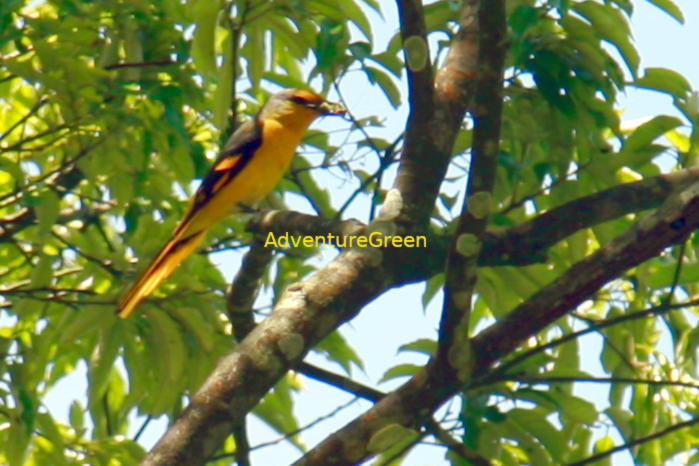
Let's join AdventureGreen on our bird quests to learn about the different birds and bird species in Vietnam. Here you can find out more about the birding spots that these bird species are found.
- Order: Passeriformes
- Family: Leiothrichidae
- Genus: Garrulax
White-crested laughingthrush
(Khướu đầu trắng, Garrulax leucolophus)
The white-crested laughingthrush (Garrulax leucolophus) is a member of the family Leiothrichidae.
The bird is bird found in forest and scrub from the Himalayan foothills to Southeast Asia.
Leiothrix Leiothrichidae Ancient Greek leios meaning "smooth" and thrix meaning "hair".
Garrulax comes from Latin garrire "to chatter"; Latin garrulus: babbling, chattering; -ax inclining towards.
leucolophus comes from Greek leukos "white" and lophos "crest".
- Order: Passeriformes
- Family: Leiothrichidae
- Genus: Garrulax
- French: Garrulaxe de Hainan
Rufous-cheeked laughingthrush
(Garrulax castanotis)
The rufous-cheeked laughingthrush (Garrulax castanotis) is a species of bird in the family Leiothrichidae.
This bird species is found only in China, Laos and Vietnam.
Leiothrix Leiothrichidae Ancient Greek leios meaning "smooth" and thrix meaning "hair".
Garrulax comes from Latin garrire "to chatter"; Latin garrulus: babbling, chattering; -ax inclining towards.
castanotis: Greek kastanon chestnut; -otis: -eared (ous,otos: ear).
- Order: Passeriformes
- Family: Leiothrichidae
- Genus: Garrulax
Grey laughingthrush
(Khướu xám, Garrulax maesi)
The grey laughingthrush (Garrulax maesi) is a species of bird in the family Leiothrichidae.
The bird is found in southern China, far northern Laos and Vietnam.
Leiothrix Leiothrichidae Ancient Greek leios meaning "smooth" and thrix meaning "hair".
Garrulax comes from Latin garrire "to chatter"; Latin garrulus: babbling, chattering; -ax inclining towards.
- Order: Pelecaniformes
- Family: Ardeidae
Oroanassa is a genus of Old World night herons typically found near water in forested regions.
The species of this genus was once placed in the genus Gorsachius.
1/White-eared night heron (Vạc hoa, Oroanassa magnifica)
(formerly Gorsachius magnificus)
other scientific names: Nycticorax magnificus
Ardeidae, Ardea: the Latin word ardea meaning "heron".
Oroanassa: Greek oros mountain; anassa queen, lady.
magnifica Latin magnificus splendid, grand (magnus great; facere to make).
- Order: Pelecaniformes
- Family: Ardeidae
- Genus: Oroanassa
White-eared night heron
(Vạc hoa, Oroanassa magnifica)
(formerly Gorsachius magnificus)
other scientific names: Nycticorax magnificus
The white-eared night heron (Oroanassa magnifica) is a species of heron in the family Ardeidae.
This bird is endemic to southern China and northern Vietnam.
Ardeidae, Ardea: the Latin word ardea meaning "heron".
Oroanassa: Greek oros mountain; anassa queen, lady.
magnifica Latin magnificus splendid, grand (magnus great; facere to make).
- Order: Passeriformes
- Family: Pellorneidae
- Genus: Napothera
White-Throated Wren-Babbler
(Napothera pasquieri)
The white-throated wren-babbler (Napothera pasquieri), endemic to the Northwest of Vietnam, is a species of bird in the family Pellorneidae.
Napothera:
Ancient Greek term napos (νάπος), meaning "timbered valley"
Thera borrowed from Latin Thēra, from Ancient Greek Θήρᾱ (Thḗrā): Thira, Santorini (an island in the Cyclades, Greece).
Greek θήρα, ας, ἡ, thēra: hunting, the chase
Greek napos ravine, gully; -theras hunter (therao: to hunt).
pasquieri: a French name.
- Order: Passeriformes
- Family: Pellorneidae
- Genus: Napothera
Eyebrowed wren-babbler
(Khướu đá nhỏ, Napothera epilepidota)
The eyebrowed wren-babbler (Napothera epilepidota) is a species of bird in the family Pellorneidae.
The bird is found in Bhutan, China, India, Indonesia, Laos, Malaysia, Myanmar, Thailand, and Vietnam.
Pellorneum, Pellorneidae: combines the Ancient Greek pellos meaning "dark-coloured" with orneon meaning "bird".
Napothera:
Ancient Greek term napos (νάπος), meaning "timbered valley"
Thera borrowed from Latin Thēra, from Ancient Greek Θήρᾱ (Thḗrā): Thira, Santorini (an island in the Cyclades, Greece).
Greek θήρα, ας, ἡ, thēra: hunting, the chase
Greek napos ravine, gully; -theras hunter (therao: to hunt).
epilepidota Greek epi excessively; lepidotos scaly.
- Order: Passeriformes
- Family: Pellorneidae
- Genus: Napothera
Long-billed wren-babbler
(Khướu đuôi cụt, Napothera malacoptila)
The long-billed wren-babbler (Napothera malacoptila) is a species of bird in the family Pellorneidae.
The bird is found in the Himalayas from north-eastern India to southern China.
Napothera:
Ancient Greek term napos (νάπος), meaning "timbered valley"
Thera borrowed from Latin Thēra, from Ancient Greek Θήρᾱ (Thḗrā): Thira, Santorini (an island in the Cyclades, Greece).
Greek θήρα, ας, ἡ, thēra: hunting, the chase
Greek napos ravine, gully; -theras hunter (therao: to hunt).
malacoptila: the Ancient Greek malakos meaning "soft"; ptila, ptilo feather.
- Order: Gruiformes
- Family: Rallidae
- Genus: Zapornia
Baillon's crake (Zapornia pusilla), also known as the marsh crake
Baillon's crake (Zapornia pusilla) is a small waterbird of the family Rallidae.
The breeding habitat is sedge beds from eastern Europe across the Palearctic.
This bird species is migratory, wintering in east Africa and south Asia.
Gruiformes, Gruidae: from the Latin word grus meaning "crane".
Rallidae: from rallus new Latin for rail, an aquatic bird.
The genus name Zapornia is from an anagram of the genus Porzana which is from the specific name of a crake.
This bird is named after French naturalist Louis Antoine Francois Baillon.
The names marsh crake and tiny crake have previously been used to refer to this species.
pusillus is Latin for "very small".
- Order: Gruiformes
- Family: Rallidae
- Genus: Zapornia
Band-bellied crake (Cuốc nâu, Zapornia paykullii)
The band-bellied crake (Zapornia paykullii) is a species of bird in the family Rallidae.
The bird breeds in Manchuria, eastern China and northern Korea and winters throughout Southeast Asia.
Gruiformes, Gruidae: from the Latin word grus meaning "crane".
Rallidae: from rallus new Latin for rail, an aquatic bird.
The genus name Zapornia is from an anagram of the genus Porzana which is from the specific name of a crake.
- Order: Gruiformes
- Family: Rallidae
- Genus: Zapornia
Black-tailed crake (Cuốc ngực xám, Zapornia bicolor)
The black-tailed crake (Zapornia bicolor) is a species of bird in the family Rallidae.
The bird is found in Bangladesh, Bhutan, China, India, Laos, Myanmar, Nepal, Thailand and Vietnam.
Gruiformes, Gruidae: from the Latin word grus meaning "crane".
Rallidae: from rallus new Latin for rail, an aquatic bird.
The genus name Zapornia is from an anagram of the genus Porzana which is from the specific name of a crake.
bicolor (or bicolōr): In Latin means "two-colored," directly combining the prefix bi- (two) and color (color).
- Order: Gruiformes
- Family: Rallidae
- Genus: Zapornia
- French: Marouette akool
Brown crake
or brown bush-hen
(Cuốc chân đỏ, Zapornia akool)
The brown crake (Zapornia akool), or brown bush-hen, is a waterbird in the rail and crake family (Rallidae) found in South Asia.
Gruiformes, Gruidae: from the Latin word grus meaning "crane".
Rallidae: from rallus new Latin for rail, an aquatic bird.
Zapornia is an anagram of the genus Porzana which is from the specific name of a crake.
akool: of uncertain origin. It may come from Hindu mythology, or it may be a derivation of the Sinhalese word kukkula, which is used for both moorhen and watercock.