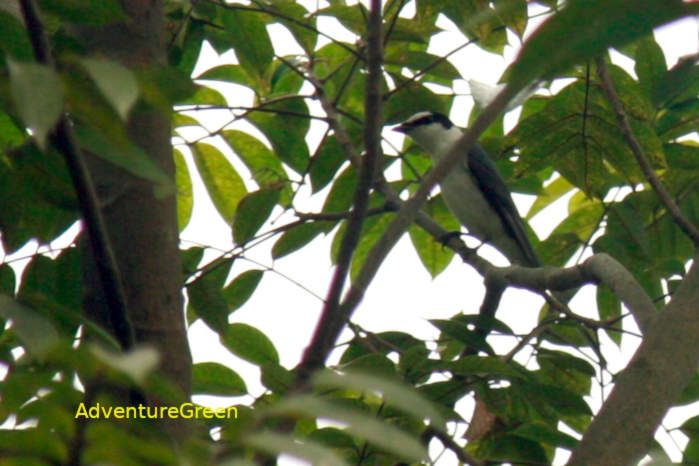


Birds of Vietnam, Bird Species in Vietnam
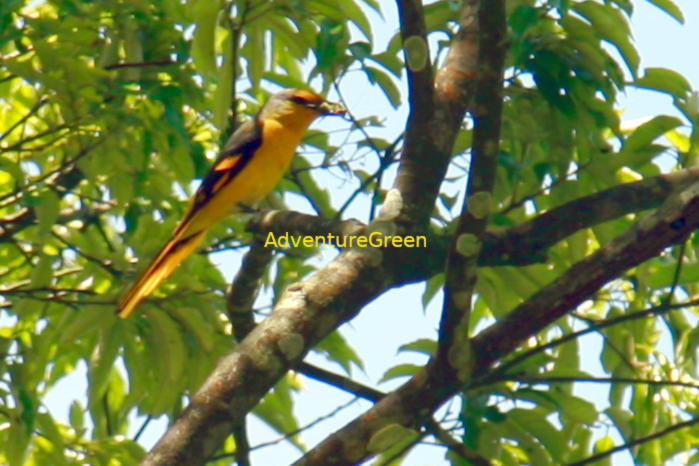
Let's join AdventureGreen on our bird quests to learn about the different birds and bird species in Vietnam. Here you can find out more about the birding spots that these bird species are found.
The Coraciiformes are a group of usually colourful birds including:
1/ The kingfishers,
2/ The bee-eaters,
3/ The rollers,
4/ The motmots,
5/ The todies,
The name Coraciiformes means "raven-like". Specifically, it comes from the Latin language "corax", meaning "raven" and Latin "forma", meaning "form".
- Order: Passeriformes
- Family: Dicruridae
The drongos are a family, Dicruridae, of passerine birds and 31 species in the family are placed in a single genus, Dicrurus.
1/ Black Drongo (Chèo bẻo, Dicrurus macrocercus)
2/ Hair-crested drongo (Chèo bẻo bờm, Dicrurus hottentottus)
3/ Lesser racket-tailed drongo (Chèo bẻo cờ đuôi bằng, Dicrurus remifer)
4/ Greater racket-tailed drongo (Chèo bẻo cờ đuôi chẻ, Dicrurus paradiseus)
5/ Crow-billed drongo (Chèo bẻo mỏ quạ, Dicrurus annectens)
6/ Bronzed drongo (Chèo bẻo rừng, Dicrurus aeneus)
7/ Ashy drongo (Chèo bẻo xám, Dicrurus leucophaeus)
8/ Short-tailed drongo (Dicrurus striatus)
Dicruridae or Dicrurus is derived from the Greek words dikros meaning forked, ouros meaning tailed.
- Order: Passeriformes
The drongos are a family, Dicruridae, of passerine birds of the Old World tropics. The 31 species in the family are placed in a single genus, Dicrurus.
Dicruridae, Dicrurus: derived from the Greek words dikros meaning forked, ouros meaning tailed.
- Order: Passeriformes
- Family: Pycnonotidae
Spizixos is a genus of passerine birds in the bulbul family Pycnonotidae.
Pycnonotus, Pycnonotidae: from Greek puknos "thick" or "compact" and -nōtos "-backed" (noton: back).
The word Spizixos combines the Ancient Greek spiza meaning "finch" with the genus name Ixos the Ancient Greek for "mistletoe"..
1/ Collared finchbill (Chào mào khoang cổ, Spizixos semitorques), also called black-headed finch-bill, Chinese finch-bill, Japanese finch-bill, collared finch-billed bulbul and Swinhoe's finch-billed bulbul
2/ Crested finchbill (Chào mào mỏ lớn, Spizixos canifrons)
- Order: Passeriformes
- Family: Pycnonotidae
Hemixos is a songbird genus in the bulbul family, Pycnonotidae.
Traits:
- The Hemixos lineage with its stark white throat;
1/ Ashy bulbul (Cành cạch xám, Hemixos flavala)
found on the Indian subcontinent and in Southeast Asia.
habitats are subtropical or tropical moist lowland forest and subtropical or tropical moist montane forest.
Formerly, classified the ashy bulbul in the genera Hypsipetes and Microscelis.
2/ Chestnut bulbul or chestnut-backed bulbul (Hemixos castanonotus)
Cành cạch hung
- Order: Passeriformes
- Family: Pycnonotidae
- Genus: Hemixos
Chestnut bulbul
or chestnut-backed bulbul (Hemixos castanonotus)
Cành cạch hung
Formerly considered a subspecies of the Ashy bulbul.
The chestnut bulbul or chestnut-backed bulbul (Hemixos castanonotus) is a songbird in the bulbul family, Pycnonotidae.
The bird is found in southern China and northern Vietnam.
Traits:
- The Hemixos lineage with its stark white throat;
- Chestnut upper neck, nape and mantle;
Pycnonotidae
pycno-
Pycnonotus
puknos "thick" or "compact" and
-nōtos "-backed".
Hemixos Gr. hemi- half-; genus Ixos bulbul;
castanotus: Greek kastanon chestnut;
-notos -backed.
- Order: Passeriformes
- Family: Pycnonotidae
Iole is a genus of songbirds in the bulbul family, Pycnonotidae. They are native to tropical eastern Asia, from India to China and south through Southeast Asia to northern Indonesia.
Iole is a feminine name of Greek origin, meaning "violet flower."
1/ The grey-eyed bulbul (Cành cạch nhỏ, Iole propinqua)
is a species of songbird in the bulbul family, Pycnonotidae. It is found in Southeast Asia in its natural habitat of subtropical or tropical moist lowland forests.
The grey-eyed bulbul was originally described in the genus Criniger and classified by some authorities within the genus Hypsipetes.
- Order: Passeriformes
- Family: Pycnonotidae
Ixos is a genus of passerine birds in the bulbul family, Pycnonotidae.
1/ Streaked bulbul, or green-backed bulbul (Cành cạch Mã Lai, Ixos malaccensis)
Also known as Hypsipetes malaccensis. Not certain of the genus.
2/ Mountain bulbul (Cành cạch núi, Ixos mcclellandii), also known as green-winged bulbul, McClelland's bulbul, McClelland's rufous-bellied bulbul, mountain streaked bulbul, and rufous-bellied bulbul
Often placed in Hypsipetes, but seems to be closer to the genus Ixos, the Sunda bulbul.
Found in Southeast Asia, named after British East India Company Surgeon John McClelland.
- Order: Passeriformes
- Family: Pycnonotidae
Hypsipetes is a genus of bulbuls, songbirds in the family Pycnonotidae. Most of its species are found in tropical forests around the Indian Ocean.
The genus name combines the Ancient Greek hupsi meaning "high" with petēs meaning "-flyer".
1/ Malagasy bulbul (Cành cạch Madagascar, Hypsipetes madagascariensis)
2/ Black bulbul (Hypsipetes leucocephalus), also known as the Himalayan black bulbul or Asian black bulbul
Rubigula is a genus of Asian passerine birds in the bulbul family, Pycnonotidae.
The name combines the Medieval Latin rubinus meaning "ruby" with Latin gula meaning "throat".
- Order: Passeriformes
- Family: Pycnonotidae
Microtarsus is a genus of passerine birds in the bulbul family, Pycnonotidae, that are found in South and Southeast Asia.
1/ The black-headed bulbul (Chào mào vàng đầu đen, Microtarsus melanocephalos) is a member of the bulbul family, Pycnonotidae. It is found in forests in south-eastern Asia.
The bird earlier were referred to as Brachypodius atriceps, Pycnonotus atriceps, and Brachypodius melanocephalos.
Passeriformes comes from Latin: passer meaning "sparrow" and -formes (from -formis) meaning "-shaped" or a bird order..
Pycnonotidae: from Greek puknos "thick" or "compact" and -nōtos "-backed" (noton: back).
Microtarsus comes from Greek roots: mikros (μικρός) meaning "small" and tarsos (ταρσός) meaning "ankle" or "sole of the foot," essentially meaning "small-footed" or "small-ankled.
- Order: Passeriformes
- Family: Pycnonotidae
The genus Brachypodius is a small genus of songbirds in the bulbul family, Pycnonotidae, that are found in South and Southeast Asia.
The word Brachypodius combines the Ancient Greek brakhus meaning "short" with pous, podos meaning "foot".
1/ The black-headed bulbul (Chào mào vàng đầu đen, Brachypodius melanocephalos) is a member of the bulbul family, Pycnonotidae. It is found in forests in south-eastern Asia.
The bird earlier were referred to as Brachypodius atriceps, Pycnonotus atriceps.