Birds of Vietnam, Bird Species in Vietnam
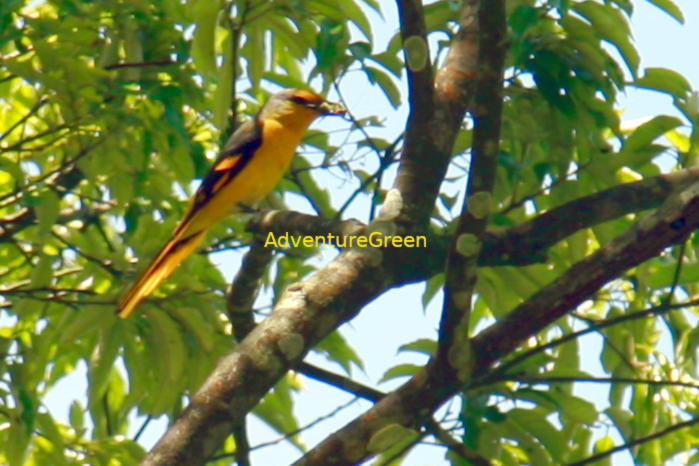
Let's join AdventureGreen on our bird quests to learn about the different birds and bird species in Vietnam. Here you can find out more about the birding spots that these bird species are found.
- Order: Charadriiformes
- Family: Scolopacidae
- Genus: Gallinago
Wood snipe (Dẽ giun lớn, Rẽ giun lớn, Gallinago nemoricola)
The wood snipe (Gallinago nemoricola) is a species of snipe which breeds in the Himalayas of northern India, Nepal, Bhutan and southern China.
In winter, it occurs at lower altitudes in the Himalayas, as a regular visitor in small numbers to north Vietnam.
The term Charadriiformes comes from New Latin, combining the Greek word kharadrios ("a bird of river valleys" or "a bird of ravines") and the Latin suffix -formes meaning "forms" or "shaped like". Therefore, Charadriiformes translates to "birds shaped like or resembling the charadrius," which is a type of plover or stone curlew historically found in dry river beds or ravines.
The word Scolopacidae is New Latin, derived from the genus name Scolopax (Latin for "snipe" or "woodcock") and the common zoological suffix for family names, -idae.
The scientific name gallinago is Neo-Latin for a woodcock or snipe from Latin gallina, "hen" and the suffix -ago, "resembling".
Nemoricola is a Latin term that means "woodland-dweller" or "forest-dweller". It is derived from the Latin word nemus, nemoris meaning "forest" or "woodland," and the Latin suffix -cola, meaning "inhabitant" or "dwelling".
- Order: Charadriiformes
- Family: Scolopacidae
- Genus: Gallinago
Common snipe (Rẽ giun, Gallinago gallinago)
The common snipe (Gallinago gallinago) is a small, stocky wader native to the Old World, belonging to the sandpiper family Scolopacidae.
The term Charadriiformes comes from New Latin, combining the Greek word kharadrios ("a bird of river valleys" or "a bird of ravines") and the Latin suffix -formes meaning "forms" or "shaped like". Therefore, Charadriiformes translates to "birds shaped like or resembling the charadrius," which is a type of plover or stone curlew historically found in dry river beds or ravines.
The word Scolopacidae is New Latin, derived from the genus name Scolopax (Latin for "snipe" or "woodcock") and the common zoological suffix for family names, -idae.
The scientific name gallinago is Neo-Latin for a woodcock or snipe from Latin gallina, "hen" and the suffix -ago, "resembling".
- Order: Charadriiformes
- Family: Scolopacidae
- Genus: Gallinago
Swinhoe's snipe,
(Dẽ giun Swinhoe, Gallinago megala), also known as forest snipe or Chinese snipe
Swinhoe's snipe, (Gallinago megala) is a medium-sized, long-billed, migratory wader of the family.
The bird breeds mainly in central and southern Siberia and Mongolia. The entire population migrates and spends the non-breeding season principally in eastern and southern India, Sri Lanka, south-eastern China, South-East Asia and New Guinea.
The term Charadriiformes comes from New Latin, combining the Greek word kharadrios ("a bird of river valleys" or "a bird of ravines") and the Latin suffix -formes meaning "forms" or "shaped like". Therefore, Charadriiformes translates to "birds shaped like or resembling the charadrius," which is a type of plover or stone curlew historically found in dry river beds or ravines.
The word Scolopacidae is New Latin, derived from the genus name Scolopax (Latin for "snipe" or "woodcock") and the common zoological suffix for family names, -idae.
The genus name gallinago is Neo-Latin for a woodcock or snipe from Latin gallina, "hen" and the suffix -ago, "resembling".
- Order: Charadriiformes
- Family: Scolopacidae
- Genus: Gallinago
Solitary snipe (Gallinago solitaria)
The solitary snipe (Gallinago solitaria) is a small stocky wader of the family Scolopacidae.
The bird is found in the Palearctic from northeast Iran to Korea and Japan.
The bird is sedentary in some regions and migratory in some other regions. The wintering grounds: northeastern Iran, Pakistan, northern India, Bangladesh, eastern China, Korea, Japan and Sakhalin...
The term Charadriiformes comes from New Latin, combining the Greek word kharadrios ("a bird of river valleys" or "a bird of ravines") and the Latin suffix -formes meaning "forms" or "shaped like". Therefore, Charadriiformes translates to "birds shaped like or resembling the charadrius," which is a type of plover or stone curlew historically found in dry river beds or ravines.
The word Scolopacidae is New Latin, derived from the genus name Scolopax (Latin for "snipe" or "woodcock") and the common zoological suffix for family names, -idae.
The genus name gallinago is Neo-Latin for a woodcock or snipe from Latin gallina, "hen" and the suffix -ago, "resembling".
Solitaria comes from Latin, meaning "solitary," "alone," or "without a companion," derived from solitarius (the feminine form), stemming from solus ("alone").
- Order: Charadriiformes
- Family: Scolopacidae
- Genus: Lymnocryptes
Jack snipe or jacksnipe (Rẽ giun nhỏ, Lymnocryptes minimus)
The jack snipe or jacksnipe (Lymnocryptes minimus) is a small wader of the family Scolopacidae.
The term Charadriiformes comes from New Latin, combining the Greek word kharadrios ("a bird of river valleys" or "a bird of ravines") and the Latin suffix -formes meaning "forms" or "shaped like". Therefore, Charadriiformes translates to "birds shaped like or resembling the charadrius," which is a type of plover or stone curlew historically found in dry river beds or ravines.
The word Scolopacidae is New Latin, derived from the genus name Scolopax (Latin for "snipe" or "woodcock") and the common zoological suffix for family names, -idae.
The genus name Lymnocryptes is from Ancient Greek limne, "marsh" and kruptos, "hidden".
The species name minimus is from Latin and means "smallest".
- Order: Charadriiformes
- Family: Scolopacidae
- Genus: Gallinago
Pin-tailed snipe or pintail snipe (Rẽ giun Á châu, Gallinago stenura)
The pin-tailed snipe or pintail snipe (Gallinago stenura) is a species of bird in the family Scolopacidae, the sandpipers.
The bird breeds in northern Russia and migrates to spend the non-breeding season in southern Asia from Pakistan to Indonesia.
This bird species is the most common migrant snipe in southern India, Sri Lanka and much of Southeast Asia.
The term Charadriiformes comes from New Latin, combining the Greek word kharadrios ("a bird of river valleys" or "a bird of ravines") and the Latin suffix -formes meaning "forms" or "shaped like". Therefore, Charadriiformes translates to "birds shaped like or resembling the charadrius," which is a type of plover or stone curlew historically found in dry river beds or ravines.
The word Scolopacidae is New Latin, derived from the genus name Scolopax (Latin for "snipe" or "woodcock") and the common zoological suffix for family names, -idae.
The genus name gallinago is Neo-Latin for a woodcock or snipe from Latin gallina, "hen" and the suffix -ago, "resembling".
stenura: From Ancient Greek στενός (stenós, “narrow”); -ouros -tailed.
- Order: Passeriformes
- Family: Leiothrichidae
- Genus: Trochalopteron
Golden-winged laughingthrush
(Khướu Ngọc Linh, Trochalopteron ngoclinhense)
The golden-winged laughingthrush (Trochalopteron ngoclinhense) is a species of bird in the family Leiothrichidae. It is endemic to Vietnam.
Leiothrix Leiothrichidae Ancient Greek leios meaning "smooth" and thrix meaning "hair".
Trochalopteron: the Ancient Greek trokhalos meaning "round" or "bowed" with pteron meaning "wing".
- Order: Charadriiformes
- Family: Scolopacidae
- Genus: Scolopax
Eurasian woodcock
(Rẽ gà , Nhát bà, Scolopax rusticola)
The Eurasian woodcock (Scolopax rusticola) is a medium-small wading bird found in temperate and subarctic Eurasia.
The term Charadriiformes comes from New Latin, combining the Greek word kharadrios ("a bird of river valleys" or "a bird of ravines") and the Latin suffix -formes meaning "forms" or "shaped like". Therefore, Charadriiformes translates to "birds shaped like or resembling the charadrius," which is a type of plover or stone curlew historically found in dry river beds or ravines.
The word Scolopacidae is New Latin, derived from the genus name Scolopax (Latin for "snipe" or "woodcock") and the common zoological suffix for family names, -idae.
The genus name Scolopaxis Latin for a snipe or woodcock.
The specific epithet rusticola is derived from Latin and refers to a "country dweller" or "rural inhabitant", stemming from the Latin words rusticus (rural) and colere (to live or cultivate).
- Order: Gruiformes
- Family: Rallidae
- Genus: Fulica
Eurasian coot
also known as the common coot, or Australian coot
(Sâm cầm, Fulica atra)
The Eurasian coot (Fulica atra), also known as the common coot, or Australian coot, is a member of the rail and crake bird family, the Rallidae.
Gruiformes, Gruidae: from the Latin word grus meaning "crane".
Rallidae: from rallus new Latin for rail, an aquatic bird.
Fulica: Latin term for "coot".
atra: Latin ater black, dark, dull black
niger: shining black.
- Order: Gruiformes
- Family: Rallidae
- Genus: Gallinula
Common moorhen
also known as the waterhen or swamp chicken, Eurasian Moorhen
(Gallinula chloropus)
The common moorhen (Gallinula chloropus), also known as the eurasian moorhen, waterhen or swamp chicken, is a bird species in the rail family (Rallidae).
Rallidae: from rallus new Latin for rail, an aquatic bird.
Gallinula: Latin for "little hen or chicken".
The Greek chloropus: Chloris ("Khloris" or from "Khloros"), meaning "greenish-yellow," "pale green," "pale," or "fresh";
pous foot.
- Order: Gruiformes
- Family: Rallidae
- Genus: Porphyrio
- French: Talève sultane
Western swamphen
(Xít, Porphyrio porphyrio)
The western swamphen (Porphyrio porphyrio) is a species of swamphen in the rail family Rallidae, one of the six species once referred to as the purple swamphen.
Gruiformes, Gruidae: from the Latin word grus meaning "crane".
Rallidae: from rallus new Latin for rail, an aquatic bird.
The genus name Porphyrio is the Latin name for "swamphen", meaning "purple".
- Order: Gruiformes
- Family: Rallidae
- Genus: Zapornia
- French: Marouette brune
Ruddy-breasted crake
or ruddy crake
(Cuốc ngực nâu, Zapornia fusca)
The ruddy-breasted crake (Zapornia fusca), or ruddy crake, is a waterbird in the rail and crake family Rallidae.
Gruiformes, Gruidae: from the Latin word grus meaning "crane".
Rallidae: from rallus new Latin for rail, an aquatic bird.
The genus name Zapornia is an anagram of the genus Porzana which is from the specific name of a crake.
fusca: Latin fuscus brown.