

Birds of Vietnam, Bird Species in Vietnam
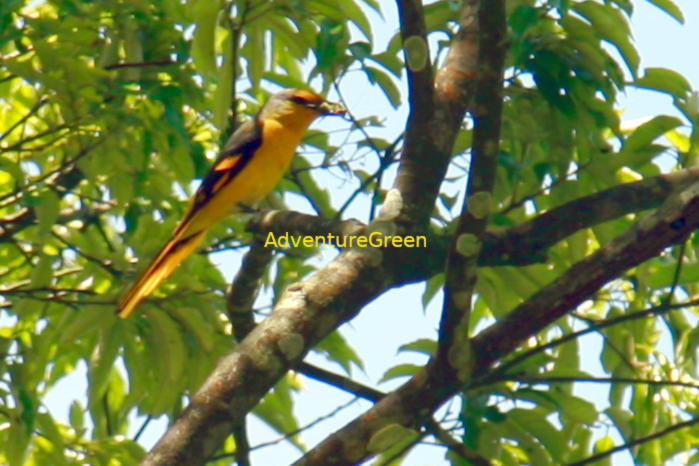
Let's join AdventureGreen on our bird quests to learn about the different birds and bird species in Vietnam. Here you can find out more about the birding spots that these bird species are found.
- Order: Passeriformes
- Family: Pycnonotidae
1/ The striated bulbul, also known as striated green bulbul or striped bulbul, (Alcurus striatus) is a species of songbird in the bulbul family, Pycnonotidae. It is the only species placed in the genus Alcurus.
The family name Pycnonotidae is from Greek: puknos "thick" or "compact" and -nōtos "-backed".
Alcurus Greek alke: might, strength; oura tail.
- Order: Passeriformes
- Family: Pycnonotidae
Alophoixus is a genus of songbird in the bulbul family, Pycnonotidae found in south-eastern Asia.
The family name is from Greek: puknos "thick" or "compact" and -nōtos "-backed".
Alophoixus Greek: alophos crestless; genus Ixos: Greek mistletoe;
1/ Ochraceous Bulbul (Cành cạch bụng hung, Alophoixus ochraceus)
2/ Puff-throated bulbul (Cành cạch lớn, Alophoixus pallidus), also the olivaceous bearded-bulbul, olivaceous bulbul and white-throated bulbul.
The latter name should not be confused with the species of the same name, Alophoixus flaveolus.
originally in the genus Criniger until moved to the genus Alophoixus in 2009.
- Order: Passeriformes
- Family: Pycnonotidae
The genus Ixodia is a small genus of songbirds in the bulbul family, Pycnonotidae.
1/ Spectacled bulbul, also known as the lesser brown bulbul (Bông lau nâu nhỏ, Ixodia erythropthalmos)
The family name Pycnonotidae is from Greek: puknos "thick" or "compact" and -nōtos "-backed".
Ixodia: From Greek, ixodes, sticky, like bird-lime.
- Order: Passeriformes
- Family: Pycnonotidae
Pycnonotus is a genus of frugivorous passerine birds in the bulbul family Pycnonotidae.
Pycnonotus, Pycnonotidae: from Greek puknos "thick" or "compact" and -nōtos "-backed" (noton: back).
1/ Red-vented bulbul (Pycnonotus cafer, Bông lau đít đỏ)
2/ Stripe-throated Bubul, or streak-throated bulbul (Bông lau họng vạch, Pycnonotus finlaysoni)
3/ Yellow-vented bulbul, or eastern yellow-vented bulbul (Bông lau mày trắng, Pycnonotus goiavier)
4/ Brown-breasted bulbul, also Anderson's Bulbul (Bông lau ngực nâu, Pycnonotus xanthorrhous)
5/ Sooty-headed bulbul (Bông lau tai trắng, Pycnonotus aurigaster)
6/ Irrawaddy, or Blanford's Olive Bubul (Bông lau tai vằn, Pycnonotus blanfordi)
Streak-eared Bulbul considered conspecific until 2016.
7/ Light-vented bulbul, also called the Chinese bulbul (Bông lau Trung Quốc, Pycnonotus sinensis)
8/ Flavescent bulbul (Bông lau vàng, Pycnonotus flavescens)
9/ Red-whiskered bulbul, or crested bulbul (Chào mào, Pycnonotus jocosus)
10/ Streak-eared Bulbul (Pycnonotus conradi, Bông lau tai vằn)
- Order: Passeriformes
The bulbuls are members of a family, Pycnonotidae, of medium-sized passerine songbirds, which also includes greenbuls, brownbuls, leafloves, and bristlebills.
The family name is from Greek: puknos "thick" or "compact" and -nōtos "-backed".
- Order: Passeriformes
- Family: Pachycephalidae
- Genus: Pachycephala
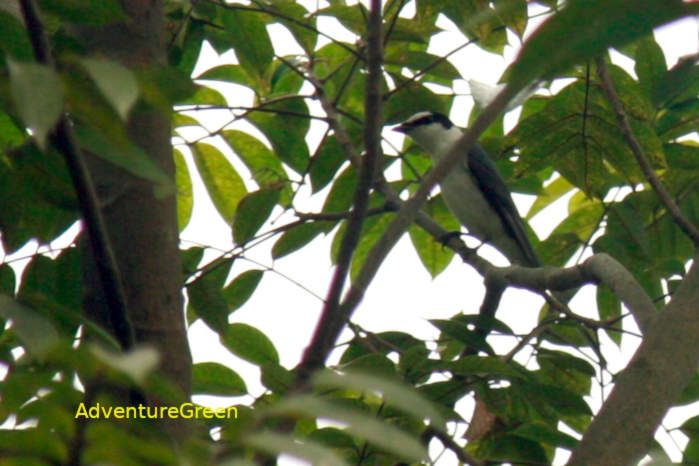
Mangrove Whistler (Bách thanh lưng lâu, Pachycephala grisola also Pachycephala cinerea)
Alternate names: mangrove whistler include the grey thickhead and white-bellied whistler.
The mangrove whistler (Pachycephala cinerea) is a species of bird in the family Pachycephalidae found in South-east Asia.
The name Pachycephala, Pachycephalidae is derived from Ancient Greek: "pakhus" (παχυς) meaning "thick" and "kephalē" (κεφαλή) meaning "head". The family name thus refers to the "thick-headed" birds, a characteristic of the whistlers and other members of the family.
Cinerea comes from Latin and means "ash-colored," "gray," or "resembling ashes," derived from the Latin word cinis (ashes).
- Order: Passeriformes
- Family: Pachycephalidae
Pachycephala is a genus of birds native to Oceania and Southeast Asia. They are commonly known as typical whistlers. Older guidebooks may refer to them as thickheads.
1/ Mangrove Whistler (Bách thanh lưng lâu, Pachycephala grisola also Pachycephala cinerea)
Alternate names for the mangrove whistler include the grey thickhead and white-bellied whistler.
The name Pachycephalidae is derived from Ancient Greek: "pakhus" (παχυς) meaning "thick" and "kephalē" (κεφαλή) meaning "head". The family name thus refers to the "thick-headed" birds, a characteristic of the whistlers and other members of the family.
- Order: Passeriformes
The Pachycephalidae are a family of bird species that includes the whistlers, shrikethrushes, and three of the pitohuis, and is part of the ancient Australo-Papuan radiation of songbirds.
The name Pachycephalidae is derived from Ancient Greek: "pakhus" (παχυς) meaning "thick" and "kephalē" (κεφαλή) meaning "head". The family name thus refers to the "thick-headed" birds, a characteristic of the whistlers and other members of the family.
- Order: Passeriformes
- Family: Laniidae
- Genus: Lanius
Tiger shrike
or thick-billed shrike
( Bách thanh vằn, Lanius tigrinus)
The tiger shrike or thick-billed shrike (Lanius tigrinus) is a small passerine bird which belongs to the genus Lanius in the shrike family, Laniidae.
The bird's range extends from south-east China south through eastern Burma, Thailand, Laos and Vietnam to Malaysia and Indonesia.
- Order: Passeriformes
- Family: Laniidae
- Genus: Lanius
Bull-headed shrike
(Bách thanh đầu hung, Lanius bucephalus)
The bull-headed shrike (Lanius bucephalus) is a passerine bird of eastern Asia belonging to the shrike family Laniidae.
The bird breeds in north-east China, Korea, Japan and far-eastern Russia.
Northern birds migrate south for the winter with a few reaching southern China, sighted in Taiwan, Hong Kong and Vietnam.
Traits:
- Black-eyelined;
- Brown-headed and brown-naped;
- White-throated;
Laniidae, Lanius: derived from the Latin word for "butcher".
bucephalus:
Cephalus: Ancient Greek: Κέφαλος Kephalos means "head".
bous bull, ox; kephale head
- Order: Passeriformes
- Family: Laniidae
Lanius, the typical shrikes, are a genus of passerine birds in the shrike family Laniidae. The majority of the family's species are placed in this genus.
Laniidae, Lanius: derived from the Latin word for "butcher".
1/ Long-tailed shrike or rufous-backed shrike (Bách thanh đuôi dài, Lanius schach)
2/ Bull-headed shrike (Bách thanh đầu hung, Lanius bucephalus)
3/ Brown shrike (Bách thanh nâu or Bách thanh mày trắng, Lanius cristatus)
4/ Burmese shrike (Bách thanh nhỏ, Lanius collurioides)
5/ tiger shrike or thick-billed shrike (Bách thanh vằn, Lanius tigrinus)
6/ Grey-backed shrike (Bách thanh lưng xám, Lanius tephronotus)
- Order: Passeriformes
Shrikes are passerine birds of the family Laniidae. The family is composed of 34 species in two genera.
The family name, and that of the largest genus, Lanius, is derived from the Latin word for "butcher", and some shrikes are also known as butcherbirds because of the habit, particularly of males, of impaling prey onto plant spines within their territories.