

Birds of Vietnam, Bird Species in Vietnam
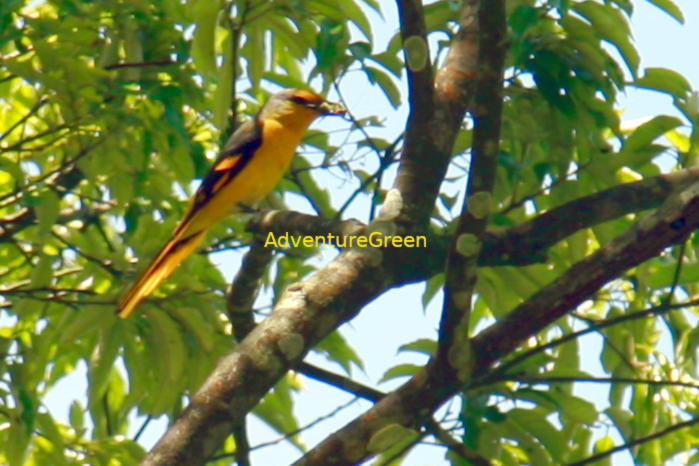
Let's join AdventureGreen on our bird quests to learn about the different birds and bird species in Vietnam. Here you can find out more about the birding spots that these bird species are found.
Podargiformes (Frogmouth) was placed in the bird order Caprimulgiformes (Nightjar) before becoming a separate order in 2021.
Podargiformes, Podargidae, Podargus: French name “Podarge” given to the frog-mouths by Cuvier.
- Order: Caprimulgiformes
- Family: Caprimulgidae
Lyncornis is a genus of eared nightjar in the family Caprimulgidae, formerly placed in the genus Eurostopodus.
Caprimulgidae: from Caprimulgus Latin caprimulgus nightjar (capra nanny goat; mulgere to milk).
The genus name Lyncornis combines the Ancient Greek lunx/lunkos meaning "lynx" and ornis meaning "bird".
The specific epithet macrotis is from the Ancient Greek makrotes, meaning "long-eared".
1/ Great eared nightjar (Cú muỗi mào, Lyncornis macrotis)
- Order: Caprimulgiformes
- Family: Caprimulgidae
Caprimulgus is a large and widespread genus of nightjars, medium-sized nocturnal birds with long pointed wings, short legs and short bills. Caprimulgus is derived from the Latin capra, "nanny goat", and mulgere, "to milk".
1/ Indian nightjar (Cú muỗi Châu Á, Caprimulgus asiaticus)
2/ Jungle nightjar (Cú muỗi Ấn Độ, Cú muỗi Ấn Độ, Caprimulgus indicus)
formerly called the grey nightjar or Indian jungle nightjar
3/ Large-tailed nightjar (Cú muỗi đuôi dài, Caprimulgus macrurus)
4/ Savanna nightjar, sometimes also allied nightjar or Franklin's nightjar, (Cú muỗi Savan, Caprimulgus affinis)
Six subspecies recognised are:
Caprimulgus affinis monticolus,
Caprimulgus affinis amoyensis,
Caprimulgus affinis stictomus,
Caprimulgus affinis affinis,
Caprimulgus affinis timorensis and
Caprimulgus affinis propinquus
- Order: Caprimulgiformes
Caprimulgidae, of which the birds are often called nightjar, from their jarring cries, is the single bird family of the order Caprimulgiformes. The birds of the family are also called goatsuckers or bugeaters and they are medium-sized nocturnal or crepuscular birds.
Caprimulgiformes, Caprimulgidae: from Caprimulgus Latin caprimulgus nightjar (capra nanny goat; mulgere to milk).
Earlier, all members of the orders Apodiformes, Aegotheliformes, Nyctibiiformes, Podargiformes, and Steatornithiformes were lumped alongside nightjars in the Caprimulgiformes. In 2021, the International Ornithological Congress redefined the order Caprimulgiformes as only applying to nightjars while potoos, frogmouths, oilbirds, and owlet-nightjars were all reclassified into their own orders.
Caprimulgiformes: from Caprimulgus Latin caprimulgus nightjar (capra nanny goat; mulgere to milk).
- Order: Cuculiformes
- Family: Cuculidae
The true koels, Eudynamys, are a genus of cuckoos from Asia, Australia and the Pacific. The name combines the Ancient Greek eu meaning "fine" with dunamis meaning "power" or "strength".
1/ Asian koel (Tu hú, Eudynamys scolopaceus)
The specific epithet scolopaceus is Modern Latin meaning "snipe-like" from Latin scolopax meaning "snipe" or "woodcock".
- Order: Cuculiformes
- Family: Cuculidae
Chrysococcyx (formerly Chalcites) is a genus of cuckoo in the family Cuculidae. The word Chrysococcyx combines the Ancient Greek khrusos meaning "gold" and kokkux "cuckoo".
1/ Violet cuckoo (Tìm vịt tím, Chrysococcyx xanthorhynchus)
2/ Asian emerald cuckoo (Tìm vịt xanh, Chrysococcyx maculatus)
The specific epithet maculatus is from Latin and means "spotted" or "blotched".
- Order: Cuculiformes
- Family: Cuculidae
Cacomantis is a genus of cuckoo in the family Cuculidae.
- Order: Cuculiformes
- Family: Cuculidae
- Genus: Phaenicophaeus
Green-billed malkoha
(Phướn lớn, Phaenicophaeus tristis)
The green-billed malkoha (Phaenicophaeus tristis) is a species of non-parasitic cuckoo found throughout Indian Subcontinent and Southeast Asia.
The bird is found across south Asia east from Nepal, India, and Sri Lanka to the Southeast Asia.
Traits:
- Gray-hooded, grey-hooded;
- Red-around-eye, red facial skin, red-faced;
The English name Malkoha is derived from the Sinhala word for the red-faced malkoha; mal-koha meaning flower-cuckoo.
The genus name Phaenicophaeus is derived from the Ancient Greek: phoiniko- crimson, and phaes meaning "eyes" or "face", referring to the red-faced malkoha.
tristis sad, unhappy, melancholy.
- Order: Cuculiformes
- Family: Cuculidae
- Genus: Phaenicophaeus
Black-bellied malkoha
(Phướn nhỏ, Phaenicophaeus diardi)
The black-bellied malkoha (Phaenicophaeus diardi) is a species of malkoha in the family Cuculidae.
The bird is found in Brunei, Indonesia, Malaysia, Myanmar, Singapore, and Thailand.
Traits:
- Gray-hooded, grey-hooded;
- Red-around-eye, red facial skin, red-faced;
The English name Malkoha is derived from the Sinhala word for the red-faced malkoha; mal-koha meaning flower-cuckoo.
The genus name Phaenicophaeus is derived from the Ancient Greek: phoiniko- crimson, and phaes meaning "eyes" or "face", referring to the red-faced malkoha.
diardi New Latin, formed as the genitive singular of a Latinization of Diard, after Pierre-Médard Diard (1794–1863), French naturalist and explorer.
- Order: Cuculiformes
- Family: Cuculidae
Phaenicophaeus is a genus of 6 species of cuckoos in the family Cuculidae. The birds are mostly known as Malkoha.
The English name is derived from the Sinhala word for the red-faced malkoha; mal-koha meaning flower-cuckoo.
The genus name is derived from the Ancient Greek: phoiniko- crimson, and phaes meaning "eyes" or "face", referring to the red-faced malkoha.
1/ Black-bellied malkoha (Phướn nhỏ, Phaenicophaeus diardi)
diardi New Latin, formed as the genitive singular of a Latinization of Diard, after Pierre-Médard Diard (1794–1863), French naturalist and explorer.
2/ Green-billed malkoha (Phướn lớn, Phaenicophaeus tristis)
tristis sad, unhappy, melancholy
- Order: Cuculiformes
- Family: Cuculidae
- Genus: Carpococcyx
Coral-billed ground cuckoo
(Phướn đất, Carpococcyx renauldi), also known as Renauld's ground cuckoo
The coral-billed ground cuckoo (Carpococcyx renauldi), also known as Renauld's ground cuckoo, is a large terrestrial species of cuckoo in the family Cuculidae.
The bird is found in Cambodia, Laos, Thailand, and Vietnam.
Cuculidae: the Latin word cuculus for "cuckoo".
Carpococcyx Greek karpos fruit ( karpos wrist);
kokkux cuckoo.