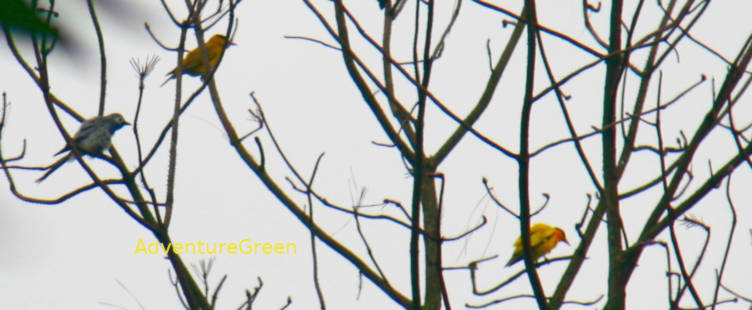


Birds of Vietnam, Bird Species in Vietnam
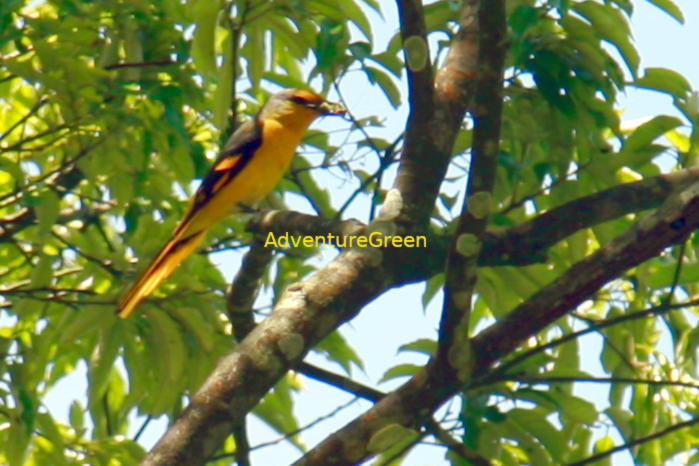
Let's join AdventureGreen on our bird quests to learn about the different birds and bird species in Vietnam. Here you can find out more about the birding spots that these bird species are found.
- Order: Passeriformes
- Family: Motacillidae
- Genus: Motacilla
Mekong Wagtail
(Motacilla samveasnae)
The Mekong wagtail (Motacilla samveasnae) is a species of bird in the family Motacillidae.
The bird is found in the Mekong valley of Cambodia and Laos, and is a non-breeding visitor to Thailand and Vietnam.
Passeriformes, Passerina, passerina: Latin passerinus sparrow-like, (i.e. sparrow-sized) (passer sparrow).
Motacillidae, Motacilla: From Latin motacilla (“wagtail”), the word is a diminutive of motare, "to move about".
- Order: Passeriformes
- Family: Motacillidae
Motacilla is a genus of passerine birds commonly known as the wagtails in the family Motacillidae.
- Order: Passeriformes
The Wagtails, the pipits and longclaws form the family Motacillidae (Họ Chìa vôi).
Passeriformes, Passerina, passerina: Latin passerinus sparrow-like, (i.e. sparrow-sized) (passer sparrow).
Motacillidae, Motacilla: From Latin motacilla (“wagtail”).
- Order: Charadriiformes
- Family: Haematopodidae
- Genus: Haematopus
The Eurasian oystercatcher (Haematopus ostralegus), also known as the common pied oystercatcher, or (in Europe) just oystercatcher, is a wader in the oystercatcher bird family Haematopodidae.
This species is found worldwide except for the polar regions.
The bird is migratory.
Charadriiformes, Charadriidae, Charadrius: Late Latin word for a yellowish bird mentioned in the fourth-century Vulgate; from Ancient Greek kharadrios a bird found in ravines and river valleys (kharadra, "ravine").
The family Haematopodidae derives its name from the Latinized scientific genus Haematopus, which is composed of Ancient Greek roots, specifically describing the bird's distinctive red legs:
- Haemato- / Haima (αἷμα): Derived from Ancient Greek, meaning "blood".
- pus / Pous (πούς): Derived from Ancient Greek, meaning "foot".
The species name ostralegus: translates to "oyster-gatherer" or "shell-gatherer".
- ostrea: Meaning "oyster".
- legere: Meaning "to gather," "to collect," or "to pick".
- Order: Charadriiformes
- Family: Burhinidae
- Genus: Esacus
Great stone-curlew or great thick-knee (Rẽ mỏ to, Esacus recurvirostris)
The great stone-curlew or great thick-knee (Esacus recurvirostris) is a large wader, a resident breeder in tropical southern Asia from India, Pakistan, Sri Lanka, Bangladesh, South-east Asia.
The bird is a visiting winter bird, uncommonly sighted at the Xuan Thuy National Park.
Charadriiformes, Charadriidae, Charadrius: Late Latin word for a yellowish bird mentioned in the fourth-century Vulgate; from Ancient Greek kharadrios a bird found in ravines and river valleys (kharadra, "ravine").
Burhinidae is a taxonomic family of birds (stone-curlews/thick-knees) derived from New Latin Burhinus and the suffix -idae.
The name Esacus is from Ancient Greek aisakos an unidentified bird variously associated with a robin, a shorebird or a cormorant.
The specific epithet recurvirostris combines Latin recurvis meaning "bent backwards" with -rostris meaning "-billed".
- Order: Charadriiformes
- Family: Jacanidae
- Genus: Hydrophasianus
- French: Jacana à longue queue
Pheasant-tailed jacana
(Gà lôi nước, Hydrophasianus chirurgus)
The pheasant-tailed jacana (Hydrophasianus chirurgus) is a jacana in the monotypic genus Hydrophasianus.
Jacana From specific name Parra jacana; Portuguese name Jaçana for the Wattled
Jacana.
The genus Hydrophasianus means "water pheasant".
chirurgus Latin chirurgus surgeon (Greek kheirourgos surgeon).
- Order: Charadriiformes
- Family: Scolopacidae
- Genus: Phalaropus
Red-necked phalarope
(Dẽ cổ đỏ, Rẽ cổ đỏ, Phalaropus lobatus), also known as the northern phalarope and hyperborean phalarope
Red-necked Phalarope (Phalaropus lobatus, Rẽ cổ đỏ) is a medium-sized wader, Scolopacidae family, Phalaropus genus.
This bird breeds in the Arctic regions of North America and Eurasia.
It is migratory, unusually winters at sea on tropical oceans.
The bird is a pass-through winter bird, uncommonly sighted at the Xuan Thuy National Park.
The term Charadriiformes comes from New Latin, combining the Greek word kharadrios ("a bird of river valleys" or "a bird of ravines") and the Latin suffix -formes meaning "forms" or "shaped like". Therefore, Charadriiformes translates to "birds shaped like or resembling the charadrius," which is a type of plover or stone curlew historically found in dry river beds or ravines.
The word Scolopacidae is New Latin, derived from the genus name Scolopax (Latin for "snipe" or "woodcock") and the common zoological suffix for family names, -idae.
Phalaropus (the genus name for phalaropes) comes from Ancient Greek: phalaris (meaning "coot") + pous (meaning "foot"), essentially translating to "coot-footed," because these birds have lobed toes like coots, a key feature for their swimming and feeding style.
The English and genus names come through French phalarope.
Lobatus is a Latin term meaning "having lobes" or "lobed," derived from the Greek lobos (lobe, pod, earlobe), used in biology for organisms or parts with rounded, protruding divisions, like the lobed toes of a phalarope or the divisions in a conch shell, often describing a "tongue-shaped" or divided structure.
- Order: Charadriiformes
- Family: Scolopacidae
- Genus: Calidris
Ruff (Rẽ lớn, Calidris pugnax)
formerly placed in different genera and was known as: Tringa pugnax, Philomachus pugnax
The ruff (Calidris pugnax) is a medium-sized wading bird that breeds in marshes and wet meadows across northern Eurasia.
The bird is migratory often found winering in southern and western Europe, Africa, southern Asia and Australia.
Charadriidae, Charadrius: Late Latin word for a yellowish bird mentioned in the fourth-century Vulgate; from Ancient Greek kharadrios a bird found in ravines and river valleys (kharadra, "ravine").
The word Scolopacidae is New Latin, derived from the genus name Scolopax (Latin for "snipe" or "woodcock") and the common zoological suffix for family names, -idae.
The genus name Calidris is from Ancient Greek kalidris or skalidris, a term used by Aristotle for some grey-coloured waterside birds.
The specific epithet refers to the aggressive behaviour of the bird at its mating arenas — pugnax from the Latin term for "combative".
The English name is derived from the ruff, an exaggerated collar fashionable from the mid-sixteenth century to the mid-seventeenth century, since the male bird's neck ornamental feathers resemble the neck-wear.
- Order: Charadriiformes
- Family: Scolopacidae
- Genus: Calidris
Broad-billed sandpiper (Rẽ mỏ rộng, Calidris falcinellus)
Some research suggests that it should rather go into the genus Philomachus.
The broad-billed sandpiper (Calidris falcinellus) is a small, wading bird of the family Scolopacidae.
This bird species is strongly migratory, spending the non-breeding season from easternmost Africa, through south and south-east Asia to Australasia.
Charadriidae, Charadrius: Late Latin word for a yellowish bird mentioned in the fourth-century Vulgate; from Ancient Greek kharadrios a bird found in ravines and river valleys (kharadra, "ravine").
The word Scolopacidae is New Latin, derived from the genus name Scolopax (Latin for "snipe" or "woodcock") and the common zoological suffix for family names, -idae.
The genus name Calidris is from Ancient Greek kalidris or skalidris, a term used by Aristotle for some grey-coloured waterside birds.
The specific name falcinella is from falx, falcis, "a sickle.
- Order: Charadriiformes
- Family: Scolopacidae
- Genus: Calidris
Curlew sandpiper (Rẽ bụng nâu, Calidris ferruginea)
The curlew sandpiper (Calidris ferruginea) is a small wader of Scolopacidae family, Calidris genus; the bird breeds on the tundra of Arctic Siberia.
This bird species is strongly migratory, wintering mainly in Africa, but also in south and southeast Asia and in Australia and New Zealand.
Curlew sandpiper is a pass-through winter bird, commonly sighted at the Xuan Thuy National Park.
Charadriidae, Charadrius: Late Latin word for a yellowish bird mentioned in the fourth-century Vulgate; from Ancient Greek kharadrios a bird found in ravines and river valleys (kharadra, "ravine").
The word Scolopacidae is New Latin, derived from the genus name Scolopax (Latin for "snipe" or "woodcock") and the common zoological suffix for family names, -idae.
The genus name Calidris is from Ancient Greek kalidris or skalidris, a term used by Aristotle for some grey-coloured waterside birds.
The specific ferruginea is from Latin ferrugo, ferruginis, "iron rust" referring to its colour in breeding plumage.
- Order: Charadriiformes
- Family: Scolopacidae
- Genus: Calidris
Dunlin (Rẽ trán trắng, Calidris alpina)
formerly placed in the genus Erolia.
Dunlin (Calidris alpina, Rẽ trán trắng) is a small wader, Scolopacidae family, Calidris genus.
The bird is a pass-through winter bird, commonly sighted at the Xuan Thuy National Park.
Charadriidae, Charadrius: Late Latin word for a yellowish bird mentioned in the fourth-century Vulgate; from Ancient Greek kharadrios a bird found in ravines and river valleys (kharadra, "ravine").
The word Scolopacidae is New Latin, derived from the genus name Scolopax (Latin for "snipe" or "woodcock") and the common zoological suffix for family names, -idae.
The genus name Calidris is from Ancient Greek kalidris or skalidris, a term used by Aristotle for some grey-coloured waterside birds.
The specific alpina is from Latin and means "of high mountains", in this case referring to the Alps.
The English name derives from dun, "dull brown", with the suffix -ling, meaning a person or thing with the given quality.
- Order: Charadriiformes
- Family: Scolopacidae
- Genus: Calidris
Temminck's stint
(Rẽ Lưng đen, Calidris temminckii)
Temminck's stint (Calidris temminckii) is a small wader of the family Scolopacidae.
The bird breeds in the taiga of Arctic northern Europe and Asia; it is strongly migratory, wintering at freshwater sites in tropical Africa, the Indian subcontinent and parts of Southeast Asia.
Charadriidae, Charadrius: Late Latin word for a yellowish bird mentioned in the fourth-century Vulgate; from Ancient Greek kharadrios a bird found in ravines and river valleys (kharadra, "ravine").
The word Scolopacidae is New Latin, derived from the genus name Scolopax (Latin for "snipe" or "woodcock") and the common zoological suffix for family names, -idae.
The genus name Calidris is from Ancient Greek kalidris or skalidris, a term used by Aristotle for some grey-coloured waterside birds.
The specific epithet is from the name of a Dutch naturalist Coenraad Jacob Temminck.