

Birds of Vietnam, Bird Species in Vietnam
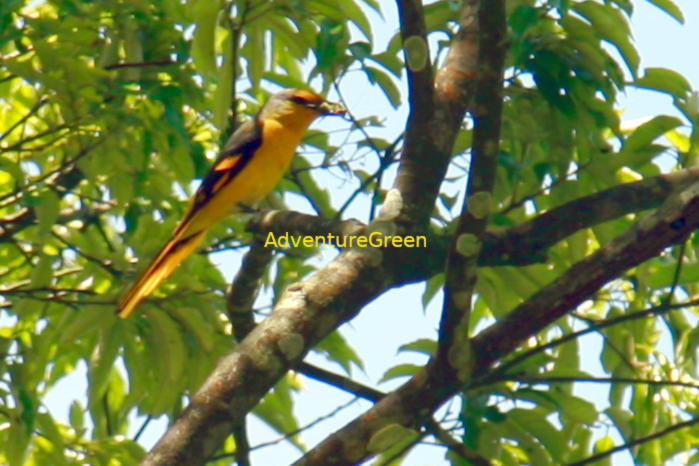
Let's join AdventureGreen on our bird quests to learn about the different birds and bird species in Vietnam. Here you can find out more about the birding spots that these bird species are found.
- Order: Charadriiformes
- Family: Laridae
- Genus: Sterna
Roseate tern (Nhàn hồng, Sterna dougallii)
The roseate tern (Sterna dougallii) is a species of tern in the family Laridae.
Charadriiformes, Charadriidae, Charadrius: Late Latin word for a yellowish bird mentioned in the fourth-century Vulgate; from Ancient Greek kharadrios a bird found in ravines and river valleys (kharadra, "ravine").
Laridae:from Ancient Greek laros or Latin larus, which appears to have referred to a gull or other large seabird.
The genus name Sterna is derived from Old English "stearn", "tern".
"Roseate" refers to the bird's pink breast in breeding plumage.
- Order: Charadriiformes
- Family: Laridae
- Genus: Sterna
Black-naped tern
(Nhàn Xumatra, Sterna sumatrana)
The black-naped tern (Sterna sumatrana) is an oceanic tern mostly found in tropical and subtropical areas of the Indian Ocean and western Pacific Ocean.
The black-naped tern inhabits rocky shores throughout the Western-Pacific and Indian oceans, migrating yearly.
Charadriiformes, Charadriidae, Charadrius: Late Latin word for a yellowish bird mentioned in the fourth-century Vulgate; from Ancient Greek kharadrios a bird found in ravines and river valleys (kharadra, "ravine").
Laridae:from Ancient Greek laros or Latin larus, which appears to have referred to a gull or other large seabird.
The genus name Sterna is derived from Old English "stearn", "tern".
Sumatrana is a Latinized, neo-Latin specific epithet meaning "of or from Sumatra" (an island in Indonesia).
The root name "Sumatra" originates from the Sanskrit word samudra, meaning "sea" or "ocean".
-ana: A Latin feminine singular suffix (from -anus) used to denote origin, location, or possession (e.g., "belonging to Sumatra").
- Order: Charadriiformes
- Family: Laridae
- Genus: Sterna
Arctic tern (Sterna paradisaea)
The Arctic tern (Sterna paradisaea) is a tern in the family Laridae.
The breeding regions include the Arctic and sub-Arctic regions of Europe (as far south as Brittany), Asia, and North America.
This bird species is strongly migratory migrating from its northern breeding grounds to the Antarctic coast
Charadriiformes, Charadriidae, Charadrius: Late Latin word for a yellowish bird mentioned in the fourth-century Vulgate; from Ancient Greek kharadrios a bird found in ravines and river valleys (kharadra, "ravine").
Laridae:from Ancient Greek laros or Latin larus, which appears to have referred to a gull or other large seabird.
The genus name Sterna is derived from Old English "stearn", "tern".
The specific paradisaea is from Late Latin paradisus, "paradise".
- Order: Charadriiformes
- Family: Laridae
- Genus: Sterna
Common tern (Nhàn, Sterna hirundo)
The common tern (Sterna hirundo) is a seabird in the family Laridae.
The breeding ground is in temperate and subarctic regions of Europe, Asia and North America.
The bird is strongly migratory, wintering in coastal tropical and subtropical regions.
Charadriiformes, Charadriidae, Charadrius: Late Latin word for a yellowish bird mentioned in the fourth-century Vulgate; from Ancient Greek kharadrios a bird found in ravines and river valleys (kharadra, "ravine").
Laridae:from Ancient Greek laros or Latin larus, which appears to have referred to a gull or other large seabird.
The genus name Sterna is derived from Old English "stearn", "tern".
The Latin for swallow is hirundo, and refers here to the tern's superficial likeness to that unrelated bird, which has a similar light build and long forked tail. This leads to the informal name "sea swallow".
- Order: Charadriiformes
- Family: Laridae
- Genus: Sterna
Black-bellied tern (Nhàn bụng đen, Sterna acuticauda)
The black-bellied tern (Sterna acuticauda) is a tern found near large rivers in the Indian subcontinent.
The distribution range is from from Pakistan, Nepal and India to Myanmar.
Charadriiformes, Charadriidae, Charadrius: Late Latin word for a yellowish bird mentioned in the fourth-century Vulgate; from Ancient Greek kharadrios a bird found in ravines and river valleys (kharadra, "ravine").
Laridae:from Ancient Greek laros or Latin larus, which appears to have referred to a gull or other large seabird.
The genus name Sterna is derived from Old English "stearn", "tern".
Acuticauda is a Latin-derived term meaning "pointy-tailed" or "sharp-tailed". It combines the Latin words acutus (pointed/sharp) and cauda (tail).
- Order: Charadriiformes
- Family: Laridae
- Genus: Sterna
River tern or Indian river tern (Sterna aurantia)
The river tern or Indian river tern (Sterna aurantia) is a tern in the family Laridae.
The bird is a resident breeder along inland rivers from Pakistan east through the Indian subcontinent, to Myanmar, Thailand, and Cambodia.
This species is only found on freshwater, not in tidal water places.
Charadriiformes, Charadriidae, Charadrius: Late Latin word for a yellowish bird mentioned in the fourth-century Vulgate; from Ancient Greek kharadrios a bird found in ravines and river valleys (kharadra, "ravine").
Laridae:from Ancient Greek laros or Latin larus, which appears to have referred to a gull or other large seabird.
The genus name Sterna is derived from Old English "stearn", "tern".
Aurantia is a New Latin term meaning "orange-colored," "tawny," or "golden," primarily derived from the Latin aurum (gold).
- Order: Charadriiformes
- Family: Laridae
Ichthyaetus is a genus of gulls. The genus name is from Ancient Greek ikhthus, "fish", and aetos, "eagle". They were previously included in the genus Larus.
1/ Pallas's gull (Mòng bể đầu đen lớn, Ichthyaetus ichthyaetus), also known as the great black-headed gull
earlier placed in the genus Larus.
2/ Relict gull or Central Asian gull (Mòng bể relic, Ichthyaetus relictus)
- Order: Charadriiformes
- Family: Laridae
- Genus: Ichthyaetus
Relict gull or Central Asian gull (Mòng bể relic, Ichthyaetus relictus)
The relict gull or Central Asian gull (Ichthyaetus relictus) is a medium-sized gull.
The birds breeds in Mongolia, in Kazakhstan, in Russia, and in China (Lake Hongjiannao).
This species is migratory and can be found in South Korea and China during the non-breeding period.
Charadriiformes, Charadriidae, Charadrius: Late Latin word for a yellowish bird mentioned in the fourth-century Vulgate; from Ancient Greek kharadrios a bird found in ravines and river valleys (kharadra, "ravine").
Laridae is a scientific taxonomic family name for gulls, terns, and skimmers, originating from the New Latin Larus (gull or seabird) combined with the suffix -idae (indicating a zoological family). The root Larus is derived from the Ancient Greek word λάρος (laros), which referred to a ravenous seabird or gull.
The genus name is from Ancient Greek ikhthus, "fish", and aetos, "eagle". The name refers to the fish-eating habits of these birds. They were previously included in the genus Larus.
Relictus is a Latin adjective and past participle of relinquere (to leave behind), meaning abandoned, forsaken, left behind, or deserted. It is derived from the Proto-Indo-European root leikw- ("to leave"), related to Greek leipein.
- Order: Charadriiformes
- Family: Laridae
- Genus: Ichthyaetus
Pallas's gull (Mòng bể đầu đen lớn, Ichthyaetus ichthyaetus), also known as the great black-headed gull
earlier placed in the genus Larus.
Pallas's gull (Ichthyaetus ichthyaetus), also known as the great black-headed gull, is a large bird species.
This bird breeds from southern Russia to Mongolia.
This species is migratory, wintering in the eastern Mediterranean, Arabia and India.
Charadriiformes, Charadriidae, Charadrius: Late Latin word for a yellowish bird mentioned in the fourth-century Vulgate; from Ancient Greek kharadrios a bird found in ravines and river valleys (kharadra, "ravine").
Laridae is a scientific taxonomic family name for gulls, terns, and skimmers, originating from the New Latin Larus (gull or seabird) combined with the suffix -idae (indicating a zoological family). The root Larus is derived from the Ancient Greek word λάρος (laros), which referred to a ravenous seabird or gull.
The genus name is from Ancient Greek ikhthus, "fish", and aetos, "eagle". The name refers to the fish-eating habits of these birds. They were previously included in the genus Larus.
The scientific name is from Ancient Greek: Ichthyaetus is from ikhthus, "fish", and aetos, "eagle".
- Order: Charadriiformes
- Family: Laridae
Saundersilarus is genus of gulls in the family Laridae.
1/ Saunders's gull (Mòng bể mỏ ngắn, Saundersilarus saundersi) or the Chinese black-headed gull
earlier placed in the genus Larus.
The Saunders's gull is named after the British ornithologist Howard Saunders.
- Order: Charadriiformes
- Family: Laridae
Larus is a large genus of gulls with worldwide distribution (by far the greatest species diversity is in the Northern Hemisphere).
The genus name is from Ancient Greek laros or Latin larus, which appears to have referred to a gull or other large seabird.
1/ European herring gull (Mòng bể chân vàng, Larus argentatus)
2/ Common gull or sea mew (Mòng bể đầu trắng, Larus canus)
3/ Black-tailed gull (Mòng bể đuôi đen, Larus crassirostris)
- Order: Charadriiformes
- Family: Laridae
- Genus: Larus
Black-tailed gull (Mòng bể đuôi đen, Larus crassirostris)
The black-tailed gull (Larus crassirostris) is a gull native to shorelines of East Asia.
This bird species is resident to coastlines of the East China Sea, Japan, Manchuria and the Kuril Islands.
Charadriiformes, Charadriidae, Charadrius: Late Latin word for a yellowish bird mentioned in the fourth-century Vulgate; from Ancient Greek kharadrios a bird found in ravines and river valleys (kharadra, "ravine").
Laridae:from Ancient Greek laros or Latin larus, which appears to have referred to a gull or other large seabird.
The genus name Larus is from Ancient Greek laros or Latin larus, which appears to have referred to a gull or other large seabird.
Crassirostris is from Latin roots: crassus (thick/fat/stout) + rostrum (beak/snout).