


Vietnam Adventure Tours & Travel, Trekking, Bird Watching, Cycling Tours
Xuan Thuy National Park
-
Common Pochard
- Order: Anseriformes
- Family: Anatidae
- Genus: Aythya
Common pochard
(Vịt đầu đỏ, Aythya ferina), known simply as pochardThe common pochard (/ˈpɒtʃərd/; Aythya ferina), known simply as pochard in the United Kingdom, is a medium-sized diving duck in the family Anatidae.
The bird is widespread across the Palearctic breeding primarily in the steppe regions of Scandinavia and Siberia, and wintering farther south and west.The name Aythya comes from the Ancient Greek word authuia, which may have referred to a sea-dwelling duck or an auklet.
In Latin, "ferina" means "of wild animals" or "wild game," derived from the root "ferus" (wild). -
Common Redshank
- Order: Charadriiformes
- Family: Scolopacidae
- Genus: Tringa
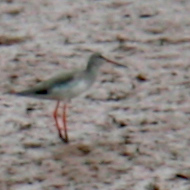
Common redshank or simply redshank (Choắt nâu, Tringa totanus)
Common Redshank (Tringa totanus, Choắt nâu) is an Eurasian wader, Scholopacidae family, tringa genus.
The bird is found across temperate Eurasia; wintering on coasts around the Mediterranean, on the Atlantic coast of Europe from Ireland and Great Britain southwards, and in South Asia.
The Common redshank is a winter pass-through bird, commonly sighted at the Xuan Thuy National Park. -
Common Shelduck
- Order: Anseriformes
- Family: Anatidae
- Genus: Tadorna
Common shelduck (Vịt khoang, Tadorna tadorna)
The common shelduck (Tadorna tadorna) is a waterfowl species of the shelduck genus, Tadorna.
The bird is widespread and common in the Euro-Siberian region of the Palearctic, breeding in temperate regions and wintering in subtropical regions.
This species is mainly associated with lakes and rivers in open country, breeding in rabbit burrows, tree holes, haystacks or similar. In winter it is common on suitable estuaries and tidal mudflats as well.anser: Latin anser goose;
anas, anatis: Latin duck.
The genus Tadorna name comes from the French name Tadorne for the common shelduck. -
Common Snipe
- Order: Charadriiformes
- Family: Scolopacidae
- Genus: Gallinago
Common snipe (Rẽ giun, Gallinago gallinago)
The common snipe (Gallinago gallinago) is a small, stocky wader native to the Old World, belonging to the sandpiper family Scolopacidae.
The term Charadriiformes comes from New Latin, combining the Greek word kharadrios ("a bird of river valleys" or "a bird of ravines") and the Latin suffix -formes meaning "forms" or "shaped like". Therefore, Charadriiformes translates to "birds shaped like or resembling the charadrius," which is a type of plover or stone curlew historically found in dry river beds or ravines.The word Scolopacidae is New Latin, derived from the genus name Scolopax (Latin for "snipe" or "woodcock") and the common zoological suffix for family names, -idae.
The scientific name gallinago is Neo-Latin for a woodcock or snipe from Latin gallina, "hen" and the suffix -ago, "resembling".
-
Common Whimbrel
- Order: Charadriiformes
- Family: Scolopacidae
- Genus: Numenius
Eurasian or common whimbrel
(Choắt mỏ cong bé, Numenius phaeopus), also known as the white-rumped whimbrel
formerly Scolopax phaeopus.The Eurasian whimbrel (Numenius phaeopus), also known as the white-rumped whimbrel in North America, is a wader in the large family Scolopacidae.
The term Charadriiformes comes from New Latin, combining the Greek word kharadrios ("a bird of river valleys" or "a bird of ravines") and the Latin suffix -formes meaning "forms" or "shaped like". Therefore, Charadriiformes translates to "birds shaped like or resembling the charadrius," which is a type of plover or stone curlew historically found in dry river beds or ravines.
The bird breeds across much of subarctic Palearctic region and Europe; and winters in Africa, South Asia and Australasia.
The whimbrel is a passthrough, winter bird commonly sighted at the Xuan Thuy National Park, northern Vietnam.
The word Scolopacidae is New Latin, derived from the genus name Scolopax (Latin for "snipe" or "woodcock") and the common zoological suffix for family names, -idae.
The English name may have been influenced by the Old French corliu, "messenger", from courir , "to run".
Numenius (Νουμήνιος, noumēnios) comes from Greek, meaning "of the new moon" or related to the moon's first phase, derived from neos (new) + mene (moon), referencing the curlew's crescent-shaped bill, though it's also linked to "bird" or used by philosophers like Numenius of Apamea, making it a term with both biological and philosophical roots from Greek to Latin.
Phaeopus comes from Ancient Greek, combining phaios (φaiós) meaning "dusky, gray, brown" and pous (ποῦς) meaning "foot" meaning "dusky-foot" or "gray-foot," used for the Whimbrel bird (Numenius phaeopus) due to its dull, brownish-gray legs and feet, contrasting its speckled brown body, and it's a Medieval Latin name.
-
Crested Kingfisher
- Order: Coraciiformes
- Family: Alcedinidae
- Genus: Megaceryle
Crested kingfisher
(Bói cá mào or Bói cá lớn, Megaceryle lugubris)The crested kingfisher (Megaceryle lugubris) is a very large kingfisher that is native to parts of southern Asia.
The bird can be seen from northeast Afghanistan to central Vietnam and Japan.Alcedo, Alcedinidae: Latin word for kingfisher.
Megaceryle is from the Ancient Greek megas, "great", and the existing genus Ceryle which is from Greek kerulos bird mentioned by Aristotle,.. but not further identified but probably mythical and associated with the halcyon, a kingfisher.
The specific name lugubris is the Latin word for "mournful". -
Dunlin
- Order: Charadriiformes
- Family: Scolopacidae
- Genus: Calidris
Dunlin (Rẽ trán trắng, Calidris alpina)
formerly placed in the genus Erolia.Dunlin (Calidris alpina, Rẽ trán trắng) is a small wader, Scolopacidae family, Calidris genus.
The bird is a pass-through winter bird, commonly sighted at the Xuan Thuy National Park.Charadriidae, Charadrius: Late Latin word for a yellowish bird mentioned in the fourth-century Vulgate; from Ancient Greek kharadrios a bird found in ravines and river valleys (kharadra, "ravine").
The word Scolopacidae is New Latin, derived from the genus name Scolopax (Latin for "snipe" or "woodcock") and the common zoological suffix for family names, -idae.
The genus name Calidris is from Ancient Greek kalidris or skalidris, a term used by Aristotle for some grey-coloured waterside birds.
The specific alpina is from Latin and means "of high mountains", in this case referring to the Alps.The English name derives from dun, "dull brown", with the suffix -ling, meaning a person or thing with the given quality.
-
Eastern Spot-billed Duck
- Order: Anseriformes
- Family: Anatidae
- Genus: Anas
Eastern spot-billed duck or Chinese spot-billed duck (Anas zonorhyncha)
The eastern spot-billed duck or Chinese spot-billed duck (Anas zonorhyncha) is a species of dabbling duck that breeds in East and Southeast Asia.
This bird species is migratory, wintering in southern China and possibly Southeast Asia.Anseriformes is derived from Latin, meaning "goose-shaped" or "goose-like," combining anser (goose) and forma (form/shape). The order constitutes ducks, geese, and swans (family Anatidae), typically known as waterfowl or wildfowl.
Anatidae is a biological family of waterfowl (ducks, geese, and swans). The term originates from New Latin Anas (stem anat-), meaning "duck," paired with the suffix -idae (denoting a zoological family). The Latin root anas traces back to the Proto-Indo-European anət- ("waterbird").
The name Anas is the Latin for "duck".
The specific epithet zonorhyncha is derived from the classical Greek words zōnē meaning "band" or "girdle" and rhunkhos meaning "bill".
-
Eurasian coot
- Order: Gruiformes
- Family: Rallidae
- Genus: Fulica
Eurasian coot
also known as the common coot, or Australian coot
(Sâm cầm, Fulica atra)The Eurasian coot (Fulica atra), also known as the common coot, or Australian coot, is a member of the rail and crake bird family, the Rallidae.
Gruiformes, Gruidae: from the Latin word grus meaning "crane".
Rallidae: from rallus new Latin for rail, an aquatic bird.
Fulica: Latin term for "coot".
atra: Latin ater black, dark, dull black
niger: shining black. -
Eurasian curlew
- Order: Charadriiformes
- Family: Scolopacidae
- Genus: Numenius
Eurasian curlew or common curlew (Choắt mỏ cong lớn, Numenius arquata)
The species name arquata is the Medieval Latin name for this bird, derived from Latin arcuatus, "bow-shaped", referring to the shape of the bill.The Eurasian curlew or common curlew (Numenius arquata) is a very large wader in the family Scolopacidae.
The bird breeds across temperate Europe and Asia. Most populations of this species are migratory wintering in Africa, southern Europe and south Asia.The term Charadriiformes comes from New Latin, combining the Greek word kharadrios ("a bird of river valleys" or "a bird of ravines") and the Latin suffix -formes meaning "forms" or "shaped like". Therefore, Charadriiformes translates to "birds shaped like or resembling the charadrius," which is a type of plover or stone curlew historically found in dry river beds or ravines.
The word Scolopacidae is New Latin, derived from the genus name Scolopax (Latin for "snipe" or "woodcock") and the common zoological suffix for family names, -idae.
The English name may have been influenced by the Old French corliu, "messenger", from courir , "to run".
Numenius (Νουμήνιος, noumēnios) comes from Greek, meaning "of the new moon" or related to the moon's first phase, derived from neos (new) + mene (moon), referencing the curlew's crescent-shaped bill, though it's also linked to "bird" or used by philosophers like Numenius of Apamea, making it a term with both biological and philosophical roots from Greek to Latin.
Arquata comes from Latin arcuatus, meaning "bow-shaped" or "arched," referring to the long, curved beak of the bird.
-
Eurasian Oystercatcher
- Order: Charadriiformes
- Family: Haematopodidae
- Genus: Haematopus
The Eurasian oystercatcher (Haematopus ostralegus), also known as the common pied oystercatcher, or (in Europe) just oystercatcher, is a wader in the oystercatcher bird family Haematopodidae.
This species is found worldwide except for the polar regions.
The bird is migratory.Charadriiformes, Charadriidae, Charadrius: Late Latin word for a yellowish bird mentioned in the fourth-century Vulgate; from Ancient Greek kharadrios a bird found in ravines and river valleys (kharadra, "ravine").
The family Haematopodidae derives its name from the Latinized scientific genus Haematopus, which is composed of Ancient Greek roots, specifically describing the bird's distinctive red legs:
- Haemato- / Haima (αἷμα): Derived from Ancient Greek, meaning "blood".
- pus / Pous (πούς): Derived from Ancient Greek, meaning "foot".The species name ostralegus: translates to "oyster-gatherer" or "shell-gatherer".
- ostrea: Meaning "oyster".
- legere: Meaning "to gather," "to collect," or "to pick". -
Eurasian Spoonbill
- Order: Pelecaniformes
- Family: Threskiornithidae
- Genus: Platalea
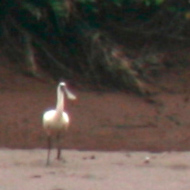
Eurasian spoonbill
(Cò thìa Á Âu, Platalea leucorodia), or common spoonbillThe Eurasian spoonbill (Platalea leucorodia), or common spoonbill, is a wading bird of the ibis and spoonbill family Threskiornithidae, widely found in Europe, Africa and Asia.
-
Eurasian Teal
- Order: Anseriformes
- Family: Anatidae
- Genus: Anas
The Eurasian teal (Mòng két, Anas crecca), common teal, or Eurasian green-winged teal
The bird gives its name to the blue-green colour teal.The Eurasian teal, common teal, or Eurasian green-winged teal (Mồng két, Anas crecca) is a common and widespread duck which breeds in temperate Eurosiberia and migrates south in winter.
The name Anas is the Latin for "duck".
"Crecca" is a Latinized onomatopoeia, from the Latin crecca or Greek krex, meaning "to cry" or "to creak," referring to the sound the Green-winged Teal makes. kricka, the Swedish name for this bird species. -
Eurasian Wigeon
- Order: Anseriformes
- Family: Anatidae
- Genus: Mareca
Eurasian wigeon or European wigeon
(Vịt đầu vàng, Mareca penelope), also known as the widgeon or the wigeonThe Eurasian wigeon or European wigeon (Mareca penelope), also known as the widgeon or the wigeon, is one of three species of wigeon in the dabbling duck genus Mareca.
The bird is common and widespread within its Palearctic range.
The name of the genus Mareca is from the Portuguese word Marreco for a small duck.
The epithet name penelope derives from Ancient Greek pene, "braid" and ops "appearance". -
Eurasian Woodcock
- Order: Charadriiformes
- Family: Scolopacidae
- Genus: Scolopax
Eurasian woodcock
(Rẽ gà , Nhát bà, Scolopax rusticola)The Eurasian woodcock (Scolopax rusticola) is a medium-small wading bird found in temperate and subarctic Eurasia.
The term Charadriiformes comes from New Latin, combining the Greek word kharadrios ("a bird of river valleys" or "a bird of ravines") and the Latin suffix -formes meaning "forms" or "shaped like". Therefore, Charadriiformes translates to "birds shaped like or resembling the charadrius," which is a type of plover or stone curlew historically found in dry river beds or ravines.The word Scolopacidae is New Latin, derived from the genus name Scolopax (Latin for "snipe" or "woodcock") and the common zoological suffix for family names, -idae.
The genus name Scolopaxis Latin for a snipe or woodcock.
The specific epithet rusticola is derived from Latin and refers to a "country dweller" or "rural inhabitant", stemming from the Latin words rusticus (rural) and colere (to live or cultivate). -
Eurasian Wryneck
- Order: Piciformes
- Family: Picidae
- Genus: Jynx
Eurasian wryneck or northern wryneck
(Vẹo cổ, Jynx torquilla)Eurasian wryneck, or northern wryneck (Vẹo cổ, Jynx torquilla) is a species of wryneck in the woodpecker family, yet it does not peck wood. This species mainly breeds in temperate regions of Europe and Asia.
Piciformes, picidae, picus: Latin woodpecker.
Jynx is from the Ancient Greek iunx, the Eurasian wryneck.
torquilla: Latin torquere to twist. -
Falcated duck
- Order: Anseriformes
- Family: Anatidae
- Genus: Mareca
Falcated duck or falcated teal
(Vịt lưỡi liềm, Mareca falcata)The falcated duck or falcated teal (Mareca falcata) is a gadwall-sized dabbling duck from the east Palearctic (East Siberia and Mongolia to North Japan; wintering to India).
This dabbling duck is strongly migratory and winters in much of Southeast Asia.The name of the genus Mareca is from the Portuguese word Marreco for a small duck.
"Falcata" comes from the Latin word falcatus, meaning "sickle-shaped" or "curved like a sickle". -
Far Eastern Curlew
- Order: Charadriiformes
- Family: Scolopacidae
- Genus: Numenius
Far Eastern curlew
(Choắt mỏ cong hông nâu, Rẽ mỏ cong hông nâu, Numenius madagascariensis)The Far Eastern Curlew (Numenius madagascariensis, Choắt mỏ cong hông nâu) is a large shorebird in the large family Scolopacidae.
The bird spends its breeding season in northeastern Asia, Siberia to Kamchatka, and Mongolia. Most individuals spend the non-breeding season in coastal Australia; some wintering in Indonesia, Thailand, Philippines and New Zealand...
The term Charadriiformes comes from New Latin, combining the Greek word kharadrios ("a bird of river valleys" or "a bird of ravines") and the Latin suffix -formes meaning "forms" or "shaped like". Therefore, Charadriiformes translates to "birds shaped like or resembling the charadrius," which is a type of plover or stone curlew historically found in dry river beds or ravines.
The word Scolopacidae is New Latin, derived from the genus name Scolopax (Latin for "snipe" or "woodcock") and the common zoological suffix for family names, -idae.
The English name may have been influenced by the Old French corliu, "messenger", from courir , "to run".
Numenius (Νουμήνιος, noumēnios) comes from Greek, meaning "of the new moon" or related to the moon's first phase, derived from neos (new) + mene (moon), referencing the curlew's crescent-shaped bill, though it's also linked to "bird" or used by philosophers like Numenius of Apamea, making it a term with both biological and philosophical roots from Greek to Latin.
Madagascariensis is a Latin-derived term meaning "belonging to or from Madagascar," indicating a species' origin from that island: the term is built from "Madagascar" plus the Latin suffix '-ensis' for origin. The term was an error or mistaken for Makassar on Sulawesi, Indonesia. This bird species has never been recorded in Madagascar.
-
Gadwall
- Order: Anseriformes
- Family: Anatidae
- Genus: Mareca
Gadwall (Vịt cánh trắng, Anas strepera) is a common and widespread dabbling duck in the family Anatidae.
Gadwall (Vịt cánh trắng, Mareca strepera)
The gadwall (Mareca strepera) is a common and widespread dabbling duck in the family Anatidae.
The gadwall breeds in the northern areas of Europe and across the Palearctic, and central North America and is seen in southern Asia.The name of the genus Mareca is from the Portuguese word Marreco for a small duck.
The specific name strepera is Late Latin for "noisy".
The etymology of the word gadwall is not known. -
Garganey
- Order: Anseriformes
- Family: Anatidae
- Genus: Spatula
Garganey
(Mồng két mày trắng, Spatula querquedula)
Garganey (Mòng két mày trắng, Anas querquedula) is a small dabbling duck in the family Anatidae.anser: Latin anser goose;
anas, anatis: Latin duck.
The name Spatula is the Latin word for "spoon", from which the English word "spatula" also originates.
The specific epithet is derived from Latin querquedula, a word believed to represent to its call.Garganey dates from the 17th century and comes from Lombard language gargenei, the plural of garganell, which ultimately comes from the Late Latin gargala "tracheal artery".