


Vietnam Adventure Tours & Travel, Trekking, Bird Watching, Cycling Tours
Pheasant
-
Lophura
- Order: Galliformes
- Family: Phasianidae
The gallopheasants (genus Lophura) are pheasants of the family Phasianidae.
The genus comprises 11 species and several subspecies.
Several species in this genus are known as firebacks, including crestless and crested firebacks, as well as the Siamese fireback.1/ Siamese fireback (Gà lôi hông tía, Lophura diardi), also known as Diard's fireback
2/ Vietnamese pheasant (Gà lôi lam đuôi trắng, Lophura hatinhensis), or Vietnam fireback,
formerly considered a species of gallopheasant, Lophura hatinhensis, but is now considered a variant of Edward's pheasant.
Endemic to central Vietnam. Its range concentrates around Kẻ Gỗ Nature Reserve in Hà Tĩnh Province.3/ The imperial pheasant (Gà lôi lam mào đen, Lophura imperialis) is a gallopheasant from Southeast Asia.
it is actually a cross of Edwards's pheasant and the silver pheasant (L. nycthemera subsp. annamensis), a hybrid.4/ Edwards's pheasant (Gà lôi lam mào trắng, Lophura edwardsi)
endemic to the seasonal tropical forests of central Vietnam.5/ Silver pheasant (Gà lôi trắng, Lophura nycthemera)
was placed in the genus Phasianus.
For some time it was placed either in Euplocamus or Gennceus.
Today all major authorities place the silver pheasant in Lophura.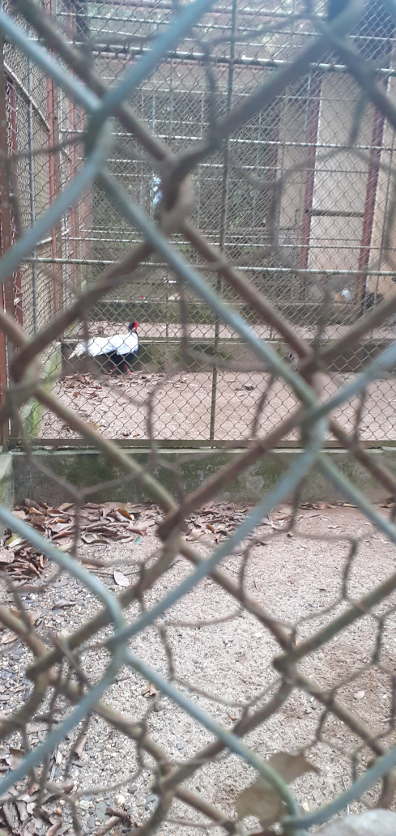
Silver Pheasant at Cuc Phuong National Park -
Pavo
- Order: Galliformes
- Family: Phasianidae
Pheasants are birds of several genera within the family Phasianidae in the order Galliformes. Pavo is a genus of two species in the pheasant family.
1/ Green peafowl or Indonesian peafowl (Công, Pavo muticus)
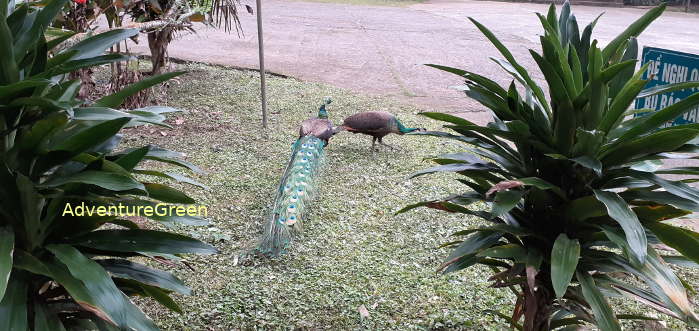
A pair of green peafowls at Cuc Phuong National Park in Ninh Binh -
Phasianus
- Order: Galliformes
- Family: Phasianidae
The "typical" pheasant genus Phasianus in the family Phasianidae consists of two species.
1/ Common pheasant (Trĩ đỏ, Phasianus colchicus), also Ring-necked pheasant
Galliformes is the scientific (Latin-based) name for the order of heavy-bodied, ground-feeding birds like chickens, turkeys, pheasants, and quail; the name itself comes from the Latin word "gallus," meaning "cock" or "rooster".
The family name Phasianidae comes from Latin phasianus, meaning "pheasant," which itself derives from the Ancient Greek word phāsiānos (φᾱσιανός), meaning "bird of the Phasis," named after the ancient river Phasis (now Rioni) in Georgia, where these birds were known to Europeans. So, the root is Greek (Phasis) -> Latin (Phasianus) -> New Latin (Phasianidae).
The genus name is Latin for pheasant.
-
Rheinardia
- Order: Galliformes
- Family: Phasianidae
Rheinardia is a genus Phasianus in the family Phasianidae.
1/ Vietnamese Crested argus (Trĩ sao, Rheinartia ocellata)
-
Ring-necked Pheasant
- Order: Galliformes
- Family: Phasianidae
- Genus: Phasianus
Common pheasant
(Trĩ đỏ, Phasianus colchicus), also Ring-necked pheasantThe common pheasant (Phasianus colchicus), ring-necked pheasant, or blue-headed pheasant, is a bird in the pheasant family Phasianidae.
Galliformes is the scientific (Latin-based) name for the order of heavy-bodied, ground-feeding birds like chickens, turkeys, pheasants, and quail; the name itself comes from the Latin word "gallus," meaning "cock" or "rooster".
The family name Phasianidae comes from Latin phasianus, meaning "pheasant," which itself derives from the Ancient Greek word phāsiānos (φᾱσιανός), meaning "bird of the Phasis," named after the ancient river Phasis (now Rioni) in Georgia, where these birds were known to Europeans. So, the root is Greek (Phasis) -> Latin (Phasianus) -> New Latin (Phasianidae).
The genus name is Latin for pheasant.
Colchicus in Latin means "of Colchis," referring to the ancient region (modern Georgia) where pheasants (Phasianus) became known to Europeans, with the Greek root tying it to the bird's origin; it's the specific name for the common pheasant, Phasianus colchicus, highlighting its Black Sea connection.
-
Temminck's Tragopan
- Order: Galliformes
- Family: Phasianidae
- Genus: Tragopan
Temminck's tragopan (Gà lôi tía, Tragopan temminckii)
The Temminck's tragopan (Tragopan temminckii) is a pheasant in the genus Tragopan.
The bird species is found across the mountains of far northeast India, central China, far northern Myanmar to northwestern Tonkin (northern Vietnam).
Galliformes is the scientific (Latin-based) name for the order of heavy-bodied, ground-feeding birds like chickens, turkeys, pheasants, and quail; the name itself comes from the Latin word "gallus," meaning "cock" or "rooster".The family name Phasianidae comes from Latin phasianus, meaning "pheasant," which itself derives from the Ancient Greek word phāsiānos (φᾱσιανός), meaning "bird of the Phasis," named after the ancient river Phasis (now Rioni) in Georgia, where these birds were known to Europeans. So, the root is Greek (Phasis) -> Latin (Phasianus) -> New Latin (Phasianidae).
The genus "tragopan" comes from Greek, combining τράγος (trágos) meaning "he-goat" and Πάν (Pán) meaning "Pan," the Greek god of woods and shepherds, often depicted with goat features, referring to the male pheasant's goat-like horns and wattle during courtship displays. The Greek term was adopted into Latin (tragopān) and then New Latin for the bird genus.
-
Tragopan
- Order: Galliformes
- Family: Phasianidae
Tragopan is a bird genus in the pheasant family Phasianidae.
Member of the genus are commonly called "horned pheasants" because males have two brightly colored, fleshy horns on their head that can be erected during courtship displays.1/ Temminck's tragopan (Gà lôi tía, Tragopan temminckii)